


L'efficacité énergétique des systèmes industriels est directement liée à la rentabilité ; il est donc essentiel de réaliser un maximum d'économies d'énergie. Les pompes hydrauliques sont des équipements indispensables pour atteindre cette efficacité énergétique. Elles transforment l'énergie mécanique en énergie hydraulique, générant ainsi le débit et la pression nécessaires au fonctionnement des systèmes hydrauliques.
Fonctionnement des pompes hydrauliques
Avant de pouvoir aborder la compréhension de l'utilisation des pompes hydrauliques, il est essentiel de savoir comment elles fonctionnent et quels sont leurs principes de fonctionnement de base.
Donc, en gros, un pompe hydraulique fonctionne sur Loi hydraulique de Pascal. Elle aspire un fluide d'un réservoir et le refoule sous pression dans un circuit hydraulique. Ce processus repose sur l'énergie mécanique fournie par un moteur thermique ou électrique. Les composants rotatifs ou mobiles de la pompe, tels que les engrenages, les palettes, les pistons ou les vis (selon le type de pompe hydraulique), génèrent un flux de fluide qui se transforme en travail utile.
Différent Types de pompes hydrauliques
En plus de ce que vous avez appris ci-dessus, il est également essentiel de connaître les différents types de pompes hydrauliques avant de répondre à la question de savoir à quoi servent les pompes hydrauliques :
- Les pompes à engrenages constituent une solution très simple et économique, idéale pour les applications à pression modérée. Elles fonctionnent grâce à un mécanisme d'engrenages interne qui convertit l'énergie mécanique en énergie hydraulique.
- Les pompes à palettes offrent un fonctionnement plus fluide et sont utilisées dans les systèmes de direction assistée et les ascenseurs où les mouvements saccadés sont intolérables.
- Une autre catégorie est celle des pompes à pistons. Elles sont utilisées pour les applications à haute pression et sont très efficaces dans les équipements hydrauliques mobiles tels que : hayons élévateurs et d'autres.
- Les pompes à vis sont silencieuses et peuvent traiter des fluides à haute viscosité dans les opérations pétrolières et gazières.
À quoi servent les pompes hydrauliques ?
On aborde rarement la question de l'utilité des pompes hydrauliques. Pour une compréhension générale, on peut considérer qu'elles servent à :
Créer du pouvoir
Comme mentionné précédemment, les pompes hydrauliques convertissent l'énergie mécanique en énergie hydraulique, laquelle actionne les machines en faisant circuler un fluide dans le système. Ce processus génère la pression nécessaire à la réalisation de tâches telles que le déplacement de matériaux, le levage d'objets lourds et l'utilisation de diverses machines. De nombreux secteurs industriels auraient des difficultés à alimenter leurs machines sans pompes hydrauliques.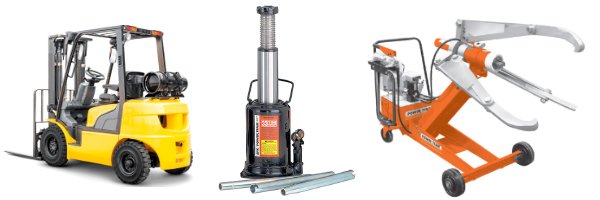
Large application des pompes hydrauliques dans de nombreuses industries
Les pompes hydrauliques sont utilisées dans de nombreux secteurs. Sur les chantiers, elles servent à manœuvrer des excavatrices, des chargeuses et des grues. En usine, elles pressent, soulèvent et façonnent des matériaux. Leur utilisation généralisée témoigne de leur rôle essentiel dans l'efficacité industrielle.
Améliorer l'efficacité du travail
L'utilisation de pompes hydrauliques permet d'accroître considérablement la productivité. Elles assurent un fonctionnement plus rapide et plus fluide des outils, réduisant ainsi les risques de panne et augmentant leur rendement. De plus, le débit constant et contrôlé du fluide hydraulique garantit un fonctionnement optimal des outils, pour une exécution rapide et précise des tâches.
Équipements d'économie d'énergie
Aujourd'hui, les pompes hydrauliques sont conçues pour être économes en énergie. En fonctionnement, elles consomment moins d'énergie, ce qui leur permet d'être plus performantes. Par conséquent, cela aide non seulement les entreprises à réduire leurs dépenses énergétiques mensuelles, mais contribue également à une méthode plus respectueuse de l'environnement.
Durabilité et fiabilité
Les pompes hydrauliques sont conçues pour fonctionner efficacement dans des environnements difficiles. Leur durabilité est assurée par leur capacité à résister aux hautes températures et aux fortes charges. Grâce à leur robustesse et leur longévité, elles peuvent être utilisées pendant de longues périodes avec un minimum d'entretien. Pour les entreprises qui exigent un fonctionnement fiable de leurs équipements au quotidien, c'est un critère essentiel.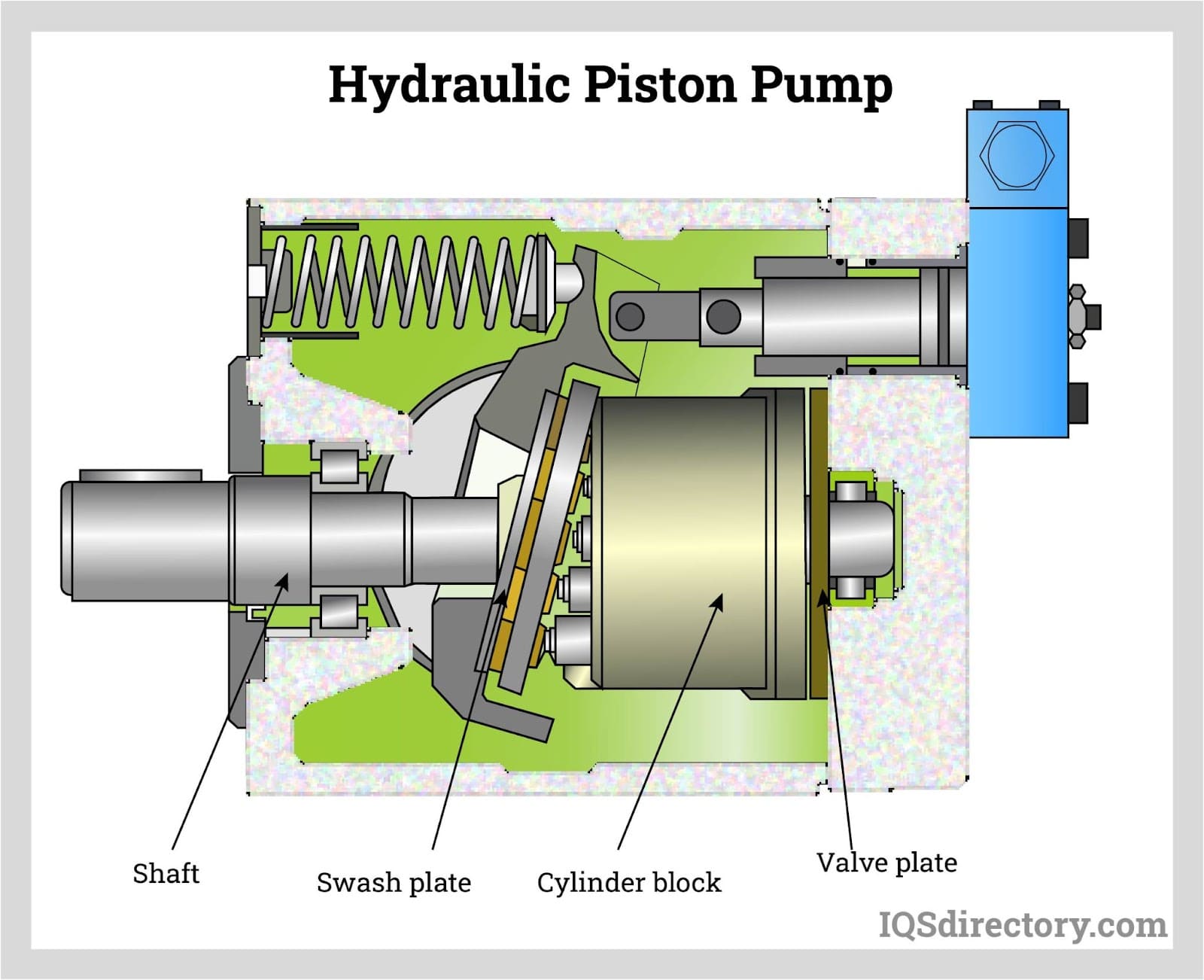
Études de cas sur les applications concrètes des pompes hydrauliques
Voici quelques exemples d'applications concrètes où l'on trouve des pompes hydrauliques :
- Les excavatrices, les bulldozers, les chargeuses, les grues et les pelles rétrocaveuses utilisent tous l'énergie hydraulique pour actionner leurs bras, lames, flèches et godets. Par exemple, une excavatrice hybride hydraulique utilise un système de pompe et d'accumulateur pour récupérer l'énergie des mouvements de la flèche, ce qui permet d'améliorer le rendement énergétique jusqu'à 251 tonnes par 300 litres aux 100 km.
- Les camions-pompes à béton utilisent des pompes à piston pour déplacer le béton avec précision et sous haute pression.
- Hayons élévateurs hydrauliques déployer la pompe hydraulique qui s'y trouve pour effectuer les opérations de levage.
- Les systèmes de direction assistée utilisent des pompes à palettes ou à engrenages pour permettre une direction sans effort.

- Les systèmes de freinage des véhicules utilisent des pompes pour fournir une pression constante et assurer un freinage sûr.
- Les hybrides hydrauliques, comme les bus et les camions de livraison, améliorent l'économie de carburant de 60 à 75 % en capturant l'énergie de freinage à l'aide de pompes entraînées par un accumulateur.
- L'une des applications importantes que vous avez peut-être déjà vues est l'utilisation des pompes hydrauliques dans l'industrie de la réparation des pneumatiques.
- Les machines de moulage par injection, les machines d'emboutissage et de pliage et les presses utilisent des pompes hydrauliques pour le formage, l'emboutissage, le pressage et le pliage des pièces métalliques.
- Les pompes hydrauliques sont également couramment utilisées dans les moissonneuses-batteuses. Celles-ci utilisent des pompes à pistons hydrauliques pour les fonctions d'alimentation, de battage et de déchargement.
- Les systèmes de direction, les treuils, la manutention des ancres, les stabilisateurs et les grues de pont fonctionnent tous grâce à l'énergie hydraulique fournie par des pompes hydrauliques. Les pompes hydrauliques marines sont conçues pour résister à la corrosion et fonctionner dans des conditions maritimes difficiles.
- Le déploiement/la rétraction du train d'atterrissage, les volets, les freins et les surfaces de contrôle de vol utilisent tous des actionneurs hydrauliques.
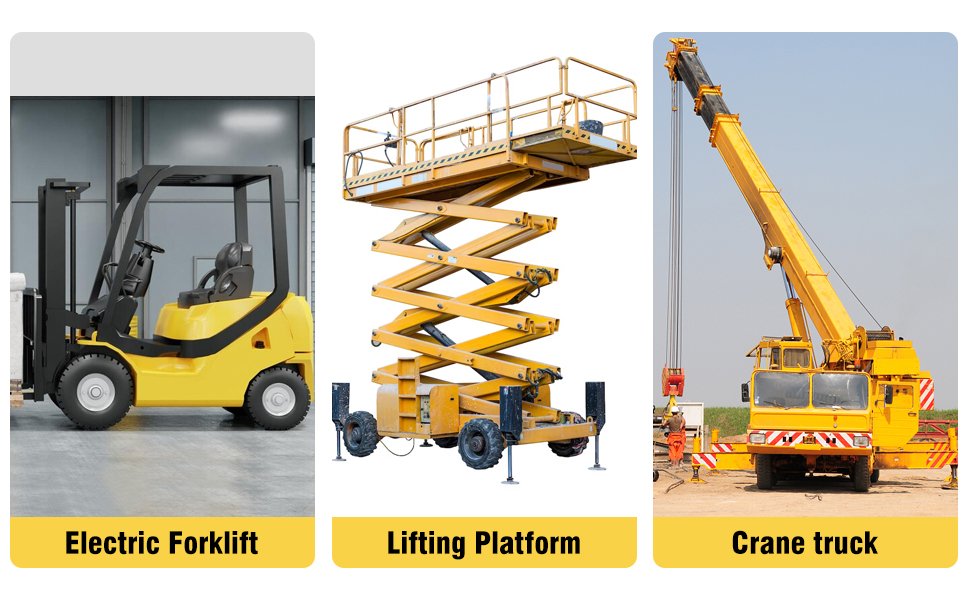
- Les chariots élévateurs, les nacelles élévatrices, les transpalettes et les ascenseurs hydrauliques dépendent de pompes pour leurs mouvements verticaux et horizontaux.
Principe de fonctionnement de tous les types de pompes hydrauliques
Bien que l'article précédent ait présenté différents types de pompes hydrauliques, leur principe de fonctionnement et leurs étapes restent globalement les mêmes. Ces pompes, qu'il s'agisse de pompes à engrenages, à pistons, à palettes ou à vis, ne diffèrent que par leurs composants mécaniques internes ou la configuration de leur mécanisme.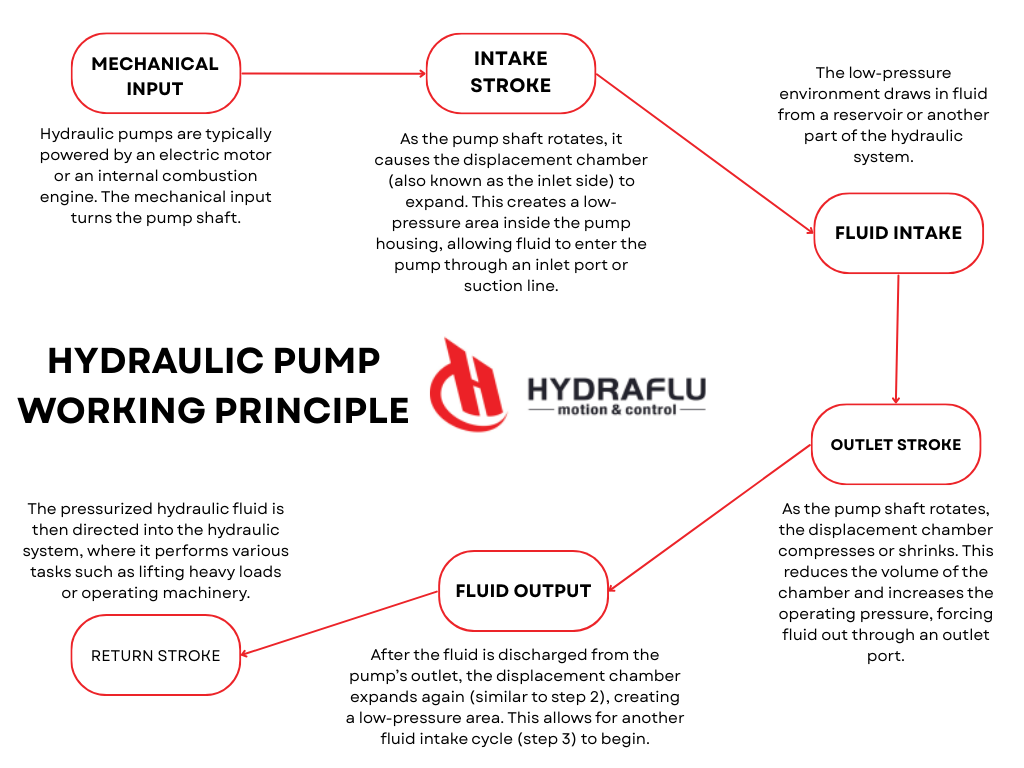
Choisir la bonne pompe hydraulique
Choisir la pompe hydraulique adaptée est l'étape la plus cruciale de la conception mécanique de vos systèmes hydrauliques. Sans cela, vous risquez de ne pas obtenir les performances escomptées en termes d'énergie, de puissance et de facilité d'entretien. Voici quelques critères de sélection clés :
- Si vous souhaitez une pression nominale très élevée, il est recommandé d'opter pour des pompes à piston, car les pompes à engrenages sont destinées aux systèmes à basse pression.
- Vous devez calculer le débit, et celui-ci doit correspondre à la taille et à la vitesse de l'actionneur.
- La viscosité du fluide est un autre facteur à prendre en compte pour le choix de la pompe hydraulique appropriée. Si la viscosité est élevée, on peut utiliser des pompes à vis ; si l’on utilise des huiles, on peut utiliser des pompes à engrenages.
- Pour réduire les coûts d'entretien et d'exploitation, nous vous recommandons d'utiliser des pompes à piston. Elles offrent un rendement élevé, mais nécessitent un entretien précis.
- Pour les applications délicates, notamment dans le secteur médical et d'autres industries, il est essentiel de réduire le bruit et les vibrations. Dans ce cas, les pompes à palettes sont idéales. Ces pompes hydrauliques sont plus silencieuses que les pompes à engrenages, qui peuvent être bruyantes (70 à 90 dB).
Réflexions finales
La réponse à la question “ À quoi servent les pompes hydrauliques ? ” concerne pratiquement tous les secteurs industriels exigeant force, précision et contrôle. Elles sont essentielles dans des domaines tels que la machinerie lourde, l'automobile, l'aérospatiale, l'énergie, la production manufacturière, l'agriculture, le secteur maritime et la santé. De plus, leur capacité à convertir la puissance mécanique en travail hydraulique permet des applications impossibles par des moyens mécaniques ou électriques seuls, notamment lorsque la haute pression et la fiabilité sont primordiales.
N'hésitez pas à nous contacter Hydraflu Pour toutes vos solutions hydrauliques en un seul endroit.

