


Les équipes industrielles choisissent les pompes hydrauliques manuelles en fonction de deux critères : la pression que vous devez atteindre et combien de coups de pied faut-il pour y arriver et effectuer le travail.
C'est pourquoi la décision entre un Pompe à main à deux étages vs pompe à un étage il s'agit en réalité de efficacité du cycle, et pas seulement la pression maximale.
A pompe à main à un étage Elle offre un rendement plus uniforme tout au long de sa course. Autrement dit, le débit d'huile à chaque mouvement de la poignée reste sensiblement le même du démarrage jusqu'à l'atteinte de la pression requise. Pour de nombreuses tâches simples, cette simplicité constitue un avantage.
Une pompe manuelle à deux étages (également appelée pompe manuelle à deux vitesses) est conçue pour les tâches complexes en deux phases.
Premièrement, il fonctionne à une pression plus basse avec un débit d'huile plus élevé – vous pouvez donc déplacer un vérin hydraulique plus rapidement avec moins de courses.
Lorsque la pression atteint le point de basculement de la pompe, celle-ci passe à une pression plus élevée avec un débit d'huile plus faible, ce qui vous permet d'effectuer les opérations de levage/pressage/test à la pression requise de manière plus efficace.
Le choix entre eux est plus facile lorsque vous connaissez votre profil d'application (distance d'approche, plage de pression requise, type de cylindre et fréquence de fonctionnement).
Dans ce guide, nous allons détailler ce que signifient concrètement les systèmes à deux étapes et à une seule étape, quand chacun convient le mieux et comment choisir entre eux à l'aide d'une simple liste de contrôle pour l'acheteur.
Pompe à main à deux étages vs pompe à main à un étage
Pompe à main à deux étages vs pompe à main à un étage (comparaison rapide)
| Ce qui compte en pratique | Pompe à main à deux étages | Pompe manuelle à un étage |
|---|---|---|
| Phase de démarrage/d'approche | Approche plus rapide (débit plus élevé à pression plus basse) | Plus uniforme opération, approche souvent plus lente |
| Phase de “ travail ” sous haute pression | Passage à une pression élevée avec un débit plus faible au point de basculement | Assure un débit identique tout au long du cycle |
| Effort et coups de l'opérateur | En général, on effectue moins de coups de poignée au total lorsqu'il y a une longue distance d'approche. | Plus de coups si votre travail nécessite une longue préparation avant la pression au travail |
| Temps de cycle | Il est préférable que votre processus présente des besoins clairs en basse pression puis en haute pression. | Convient lorsque la phase d'approche est courte ou non critique |
| Applications les plus adaptées | Méthode de chargement pour les vérins hydrauliques, les presses, les systèmes de levage et les flux de travail d'essais de pression, où l'objectif est d'atteindre efficacement la pression de service. | Cylindres à course réduite, cycles courts ou applications nécessitant un fonctionnement de pompage plus simple |
La règle de décision la plus simple
Choisissez une pompe manuelle à deux étages lorsque votre processus nécessite une phase d'approche rapide à basse pression, suivie d'une phase de travail à haute pression.
Choisissez une pompe manuelle à un seul étage lorsque la tâche est simple et que vous ne vous souciez pas d'accélérer la phase d'approche par un changement de flux progressif.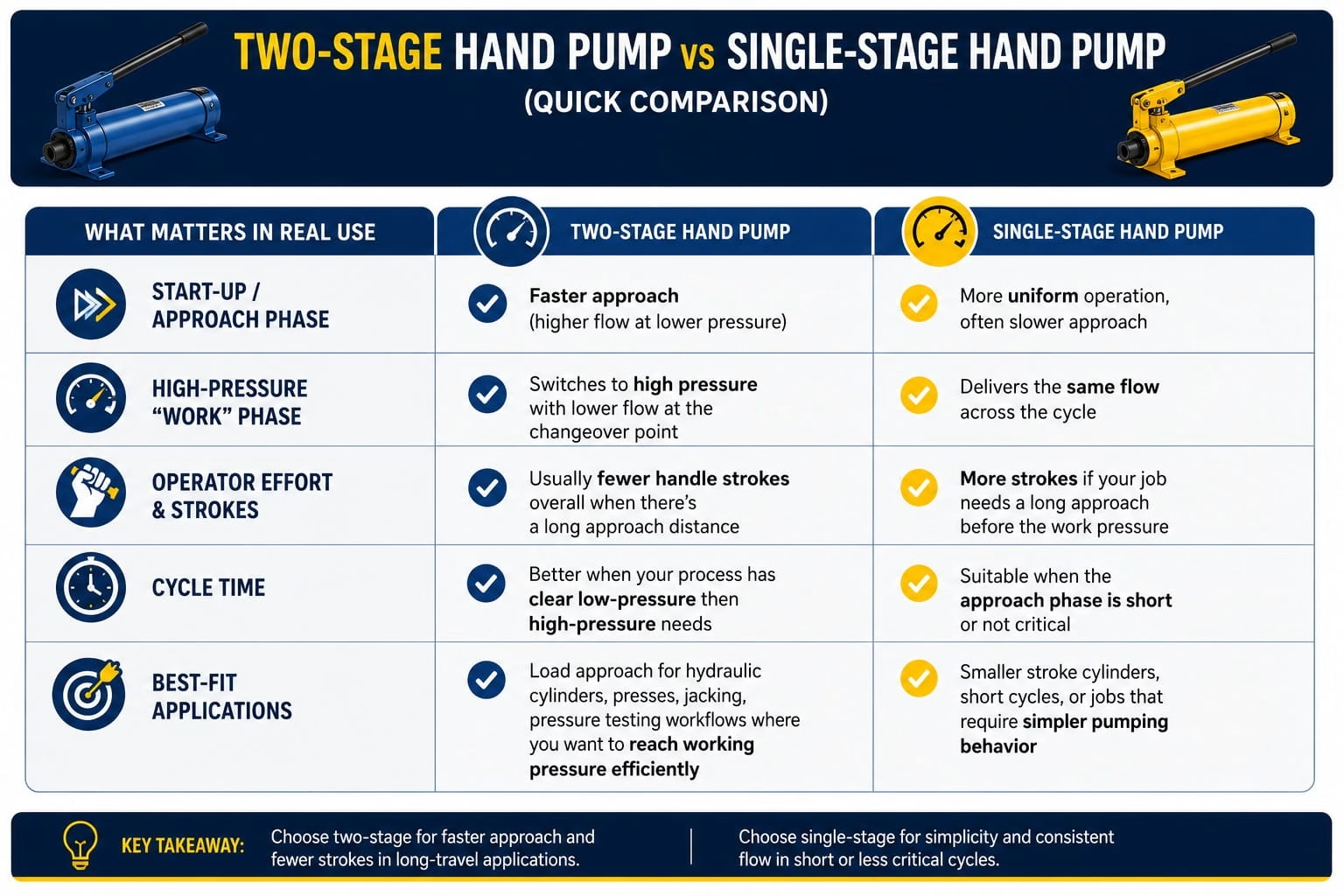
(Légende: Pompe à main à deux étages vs pompe à main à un étage: comparaison rapide)
Que signifie “ à deux étages ” pour les pompes hydrauliques manuelles ?
Fonctionnement en deux étapes sur toute la plage de pression
Une pompe manuelle à deux étages répond à deux besoins de performance distincts en modifiant ce que la pompe “ fait ” concrètement lorsque la pression commence à augmenter.
Au début d'un cycle, la pression du système est généralement faible. Dans cette plage, une pompe à deux étages est configurée pour fournir un débit d'huile plus élevé (et donc un déplacement d'huile plus important) par course de la poignée, mais à une pression plus basse.
C'est important car, dans les systèmes hydrauliques, la vitesse à laquelle vous déplacez un vérin ou un outil est fortement influencée par la quantité d'huile que vous injectez dans le circuit.
En continuant de pomper, la pression augmente. À un point de basculement défini, la pompe passe à son deuxième étage : pression plus élevée et débit d'huile plus faible. C'est cet étage qui fournit la force de travail réelle, par exemple la force nécessaire pour soulever, presser, actionner un cric, effectuer un mouvement contrôlé ou maintenir une pression donnée suffisamment longtemps pour accomplir une tâche.
Pour en savoir plus sur le fonctionnement d'une pompe hydraulique à deux étages, Cliquez ici.
En termes simples :
Étape 1 (approche) : Plus de déplacement d'huile par course, moins de pression.
Étape 2 (travail) : Moins de déplacement d'huile par course, plus de pression.
Pourquoi les pompes manuelles à deux étages peuvent-elles réduire les coups de pompe et la fatigue de l'opérateur ?
Si votre vérin hydraulique doit parcourir une longue distance avant d'atteindre la pression de service élevée, une pompe à deux étages est judicieuse. Lors de sa première phase de fonctionnement, elle permet de couvrir cette distance rapidement avec un nombre réduit de courses. Moins de courses signifient moins de fatigue pour l'opérateur.
En revanche, une pompe manuelle monobloc ne présente pas ce comportement de ‘ débit élevé à basse pression, puis faible débit à haute pression ’. Elle assure un pompage constant tout au long du cycle.
Deux étages contre deux vitesses
Dans le secteur des pompes manuelles, les termes “ à deux étages ” et “ à deux vitesses ” sont souvent utilisés indifféremment. L’idée principale reste la même : une phase de transition dans les performances. du débit d'huile élevé au débit d'huile faible, et de la basse pression à la haute pression.
Quand une pompe manuelle à un seul étage est-elle le meilleur choix ?
A pompe à main à un étage est souvent le bon choix lorsque vos opérations ne nécessitent pas une phase d'approche à haut débit dédiée.
Quand choisir une pompe manuelle à un seul étage ?
Lorsque votre distance d'approche est courte
Si le cylindre atteint rapidement sa pression de service, une pompe manuelle à deux étages et deux vitesses n'est pas nécessaire. Une pompe manuelle à un seul étage vous donnera les meilleurs résultats.
Lorsque vous avez un budget limité
Les pompes manuelles à un étage sont relativement beaucoup moins chères que les pompes manuelles à deux étages.
Lorsque vous souhaitez une opération plus simple
L'absence de fonctionnement par commutation dans une pompe manuelle à un seul étage réduit la complexité d'ingénierie et diminue les besoins en formation des opérateurs.
Quand vous voulez une pression principale constante
Si vous souhaitez avant tout maintenir une pression fixe et constante tout au long de l'opération, optez pour une pompe manuelle à un seul étage.
Comment choisir la pompe hydraulique manuelle adaptée (à deux étages ou à un étage) : un guide d’achat en 5 points
Choisir entre une pompe manuelle à deux étages et une pompe à un étage devient simple une fois que vous avez évalué vos besoins en fonction de la pression et du comportement du cycle. Utilisez cette liste de vérification pour éviter les erreurs d'achat les plus courantes lors de l'acquisition d'une pompe hydraulique manuelle :
1. Déterminer la pression requise du système
Identifiez votre besoin en pression maximale et assurez-vous que la pression nominale de la pompe corresponde à ce besoin.
2. Identifiez le type de votre vérin et son comportement hydraulique
Cylindre à simple effet contre cylindre à double effet Cela modifie généralement la configuration requise. Veillez également à prendre en compte le comportement hydraulique nécessaire à vos opérations : extension rapide, mouvement contrôlé ou maintien de la pression.
3. Une phase “ d’approche ” ou “ initiale ” est-elle nécessaire ?
Si vous souhaitez déplacer la charge avant d'atteindre la haute pression, une pompe manuelle à deux étages est préférable. Par exemple, pour soulever un objet en hauteur, le mettre à l'aide d'un cric, puis écarter les pièces jusqu'à ce qu'elles se touchent.
Si vous souhaitez que le cylindre atteigne rapidement la pression maximale, une pompe manuelle à un seul étage devrait suffire.
4. Pour les pompes à deux étages, comparez toujours le comportement de chaque étage.
Lors du choix d'une pompe manuelle à deux étages, ne vous contentez pas de regarder la pression maximale admissible. Il faut également tenir compte de la pression de commutation, du débit d'huile au premier étage et du débit d'huile au deuxième étage.
5. LA TAILLE ADAPTÉE DU RÉSERVOIR
Les opérateurs pomperont-ils en continu pendant de longues périodes ou les cycles seront-ils plus courts ? Pour des cycles plus longs, il est conseillé de choisir une pompe manuelle avec grands réservoirs hydrauliques.
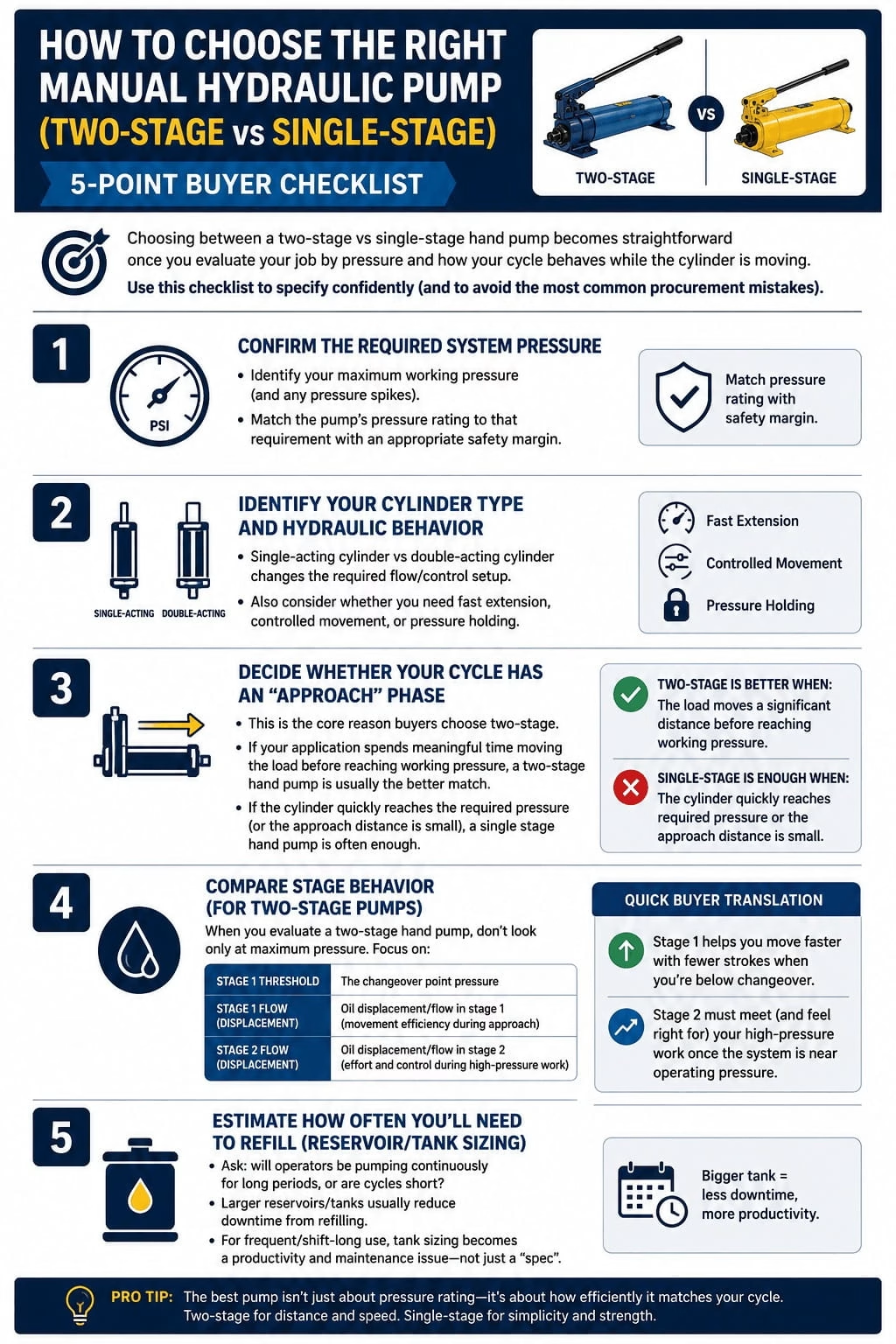
(Légende : Pompe à main à deux étages ou pompe à main à un étage : que choisir ? – Liste de vérification pour l’acheteur)
Pompe à main à deux étages ou à un étage : vérification de la sécurité et des spécifications avant l’achat
Même après le Pompe à main à deux étages ou à un seul étage Même si la liste de contrôle est complétée, des problèmes peuvent toujours survenir si la sécurité et les spécifications ne sont pas vérifiées.
Lisez attentivement cette section car elle peut constituer votre vérification rapide de sécurité lors de l'achat d'une pompe hydraulique manuelle :
1. Vérification de la protection contre la pression
Toutes les pompes hydrauliques manuelles sont conçues pour prévenir la surpression grâce à des dispositifs de sécurité tels qu'une soupape de décharge, une soupape de sécurité interne et un système de relâchement/décharge. Vous devez vous assurer que la pompe choisie possède la protection adaptée à la plage de pression de votre système.
2. Faites correspondre la pression maximale de la pompe à la pression de service maximale de votre configuration.
Ne vous fiez pas à la pression maximale nominale d'une pompe pour garantir son bon fonctionnement. Vérifiez toujours la pression de service maximale de votre système, surveillez les éventuelles surpressions et envisagez les scénarios les plus défavorables avant de choisir une pompe hydraulique manuelle.
3. Vérifiez le manomètre et les options de surveillance
Votre équipe pourrait souhaiter surveiller la pression lors de la phase d'installation, de la montée en puissance ou des essais. Certaines pompes manuelles sont équipées d'un manomètre, tandis que d'autres permettent d'en connecter un via un adaptateur. Si la vérification de la pression est importante pour vous, assurez-vous toujours que la pompe manuelle choisie possède un manomètre intégré.
4. Bonnes pratiques en matière de tuyaux d'arrosage
Vérifiez toujours que l'interface mécanique de votre pompe manuelle assure une bonne transmission de la pression et du débit. Avant de prendre votre décision, contrôlez le filetage du port de pression, le raccord d'entrée/d'aspiration et l'étanchéité du tuyau.
5. Sécurité opérationnelle
Assurez-vous que votre équipe dispose d'instructions claires concernant la séquence de déclenchement, car même la meilleure pompe doit être utilisée de manière constante. Vous devez communiquer les limites de fonctionnement sécuritaires à vos opérateurs.

(Légende : Choses à vérifier avant d’acheter un pompe hydraulique manuelle)
FAQ relatives aux pompes à main à deux étages et à un seul étage
1. Que signifie “ pompe manuelle à deux étages ” ?
Une pompe à main à deux étages (également appelée pompe à main à deux vitesses) est conçue pour fonctionner en deux phases : la Phase d'approche et le Phase de travail. Il fournit généralement un débit d'huile plus élevé à une pression plus basse lors de la phase d'approche/initiale. Ensuite, il passe à la phase de travail, manuellement ou automatiquement, fournissant une pression plus élevée et un débit d'huile plus faible.
2. Que signifie “ pompe manuelle à un étage ” ?
Une pompe manuelle à un seul étage fournit un débit et pression constants Tout au long du cycle de travail, elle ne dispose pas de mécanisme dédié au passage de l'approche à la tâche. Elle est plus simple et moins coûteuse qu'une pompe manuelle à deux étages.
3. Comment choisir entre une pompe à deux étages et une pompe à un seul étage ?
Si vous souhaitez une phase initiale notable à basse pression avant d'atteindre la pression de service maximale, vous devriez choisir une pompe manuelle à deux étages.
Si vous souhaitez atteindre rapidement la pression de travail maximale et maintenir une pression constante tout au long du cycle, vous devriez choisir une pompe manuelle à un seul étage.
4. Une pompe à main à deux étages réduit-elle le nombre total de coups de pompe ?
Oui. Puisqu'une pompe manuelle à deux étages fournit déplacement d'huile accru Durant la phase d'approche/initiale, votre opérateur devra effectuer moins de coups de pompe.
5. Puis-je utiliser une pompe à main à deux étages avec un cylindre à simple effet ?
Oui. Les pompes à deux étages sont couramment utilisées avec des vérins à simple effet pour diverses applications. Assurez-vous que votre distributeur hydraulique est compatible avec les exigences du vérin.
Conclusion
Choisir entre Pompes à main à deux étages contre pompes à un étage Le choix final devrait reposer sur l'adéquation de la pompe à vos besoins spécifiques.
En un mot,
- Choisissez une pompe manuelle à deux étages lorsque votre travail exige que votre opération passe par une phase initiale/d'approche (déplacement, levage, levage ou écartement) avant d'atteindre la pression maximale.
- Choisissez une pompe manuelle monobloc si votre application nécessite d'atteindre rapidement une pression élevée. Une pompe monobloc est également recommandée pour une installation plus simple et plus compacte.
Si vous avez besoin d'aide pour choisir la meilleure pompe manuelle, n'hésitez pas à Contactez-nous. Nos experts vous aideront à prendre la bonne décision, en fonction de vos besoins spécifiques.

