


Hydraulic lifts are used to lift huge goods in many different types of industries, such as manufacturing, construction, automotive, warehousing, healthcare, and building transportation. The hydraulic power units are the power driving part of any hydraulic lift application. They make, control, and keep hydraulic pressure, which is the main operational function for all types of applications. Hydraulic lifts use pressurised fluid to multiply force, which lets them lift heavy loads with accuracy and stability.
Hydraulic Power Units
A Hydraulic Power Unit (HPU) consists of a pump, electric motor or DC motor, reservoir, filtration system, manifold valves, and pressure controls, working together to power the hydraulic cylinders that perform the lifting in all types of hydraulic lifts. You can learn more about it here.
Hydraulic Lift Applications
Although traditional pulley-based lift systems are still common, hydraulic lifts are replacing them due to their efficient operation. Some common hydraulic lift applications, along with technical details and HPU specifications, are in the table below:
Table: Common Hydraulic Lift Applications and HPU Technical Details
| Industry / Application | Hydraulic Lift Type | Technical Purpose | Key Specifications | Hydraulic Power Unit |
| Automotive Industry | Two-post & four-post vehicle lifts, scissor lifts | Elevate vehicles for inspection, repair, and servicing | Capacities: 3,000–20,000 lbs; mechanical locks; controlled descent valves | Compact HPUs with gear pumps (2,000–3,000 psi), 1–5 HP motors, 4–15 L reservoirs |
| Manufacturing & Warehousing | Goods lifts, freight elevators, dock lifts, pallet lifts | Move materials, equipment, and goods between floors | Capacities up to 10+ tons; PLC-controlled; heavy-duty cylinders | Industrial HPUs with larger reservoirs (50–200 L), 5–30+ HP motors, and cooling units |
| Construction | Boom lifts, cherry pickers, scissor work platforms | Provide elevated access for installation, inspection, and exterior work | Heights 20–150 ft; multi-stage cylinders; stabilisers | Mobile HPUs with high-pressure piston pumps, diesel/electric motors, and load-holding valves |
| Healthcare | Patient lifts, exam tables, surgical tables | Move or position patients with stability and low vibration | Capacities 300–600 lbs; soft, slow movement | Low-noise HPUs with small reservoirs (1–3 L), low-wattage motors, soft-start valves |
| Stage & Theatre | Stage lifts, orchestra pit lifts, equipment lifts | Raise/lower stage sections, props, and performers | Multi-cylinder synchronisation; high precision | HPUs with servo valves, 100–300 L reservoirs, multi-pump configurations |
| Building Transportation | Hydraulic elevators, service lifts | Transport people and goods vertically in low- to mid-rise buildings | Common for ≤7 floors; smooth ride control | HPUs with submersible pumps, 150–400 L reservoirs, and electronic valve controllers |
Application of Hydraulic Lift in the Automotive Industry
Hydraulic lifts are indispensable in automotive workshops to help auto mechanics safely raise cars and trucks for inspections, repairs, and maintenance. These systems rely heavily on compact HPUs to deliver quick cycle times and reliable lifting force.
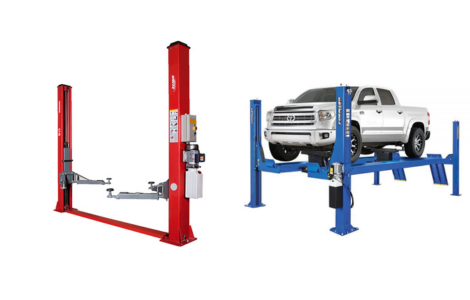
Automotive lift HPUs are typically attached directly to the lift column. They use:
- Gear pumps delivering 2,000–3,000 psi
- 1–5 HP electric motors
- 4–15 L reservoirs for fast duty cycles
- Solenoid valves or manual lowering valves for raising/lowering control
- Pressure relief valves for overload protection
Hydraflu’s Car Lift Hydraulic Pump Power Unit pushes hydraulic fluid into the lifting cylinders, elevating the arms or platform. During descent, the HPU meters fluid back into the tank to ensure smooth lowering.

In any type of hydraulic lifting system, without a properly sized hydraulic power pack, lifts would suffer from slow operation, jerky movement, or unsafe pressure imbalances. A carefully designed and viable hydraulic power unit’s precision directly impacts technician safety and service quality. Which is why the care for selecting the right hydraulic power unit is necessary for the installation company.
Application of Hydraulic Lift in the Manufacturing & Warehousing Industry
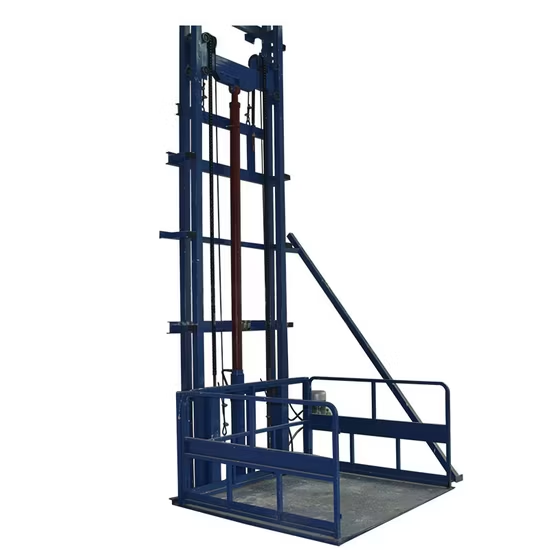
Hydraulic lifts in industrial environments must handle large loads continuously. These lifts are integrated with automated systems and conveyor lines through the use of a powerful hydraulic unit or power pack. Industrial power blocks are larger and designed for continuous duty cycles, for example:
- Pump types: High-flow gear or vane pumps
- Motor sizes: 5–30+ HP
- Reservoirs: 50–200 L for thermal stability
- Controls: PLC integration, proportional valves, pressure-compensated flow systems
- Cooling: Air-cooled or water-cooled heat exchangers
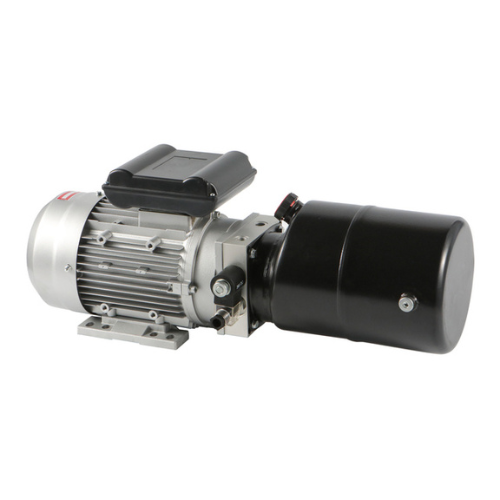
These hydraulic power units, such as 220 Volt double-acting hydraulic power unit, provide the necessary pressure to lift pallets, machinery, or products between levels, maintaining stability across repeated cycles. The right HPU ensures smooth operation under variable loads, prevents overheating, and supports automation.
Application of Hydraulic Lift in the Construction Industry
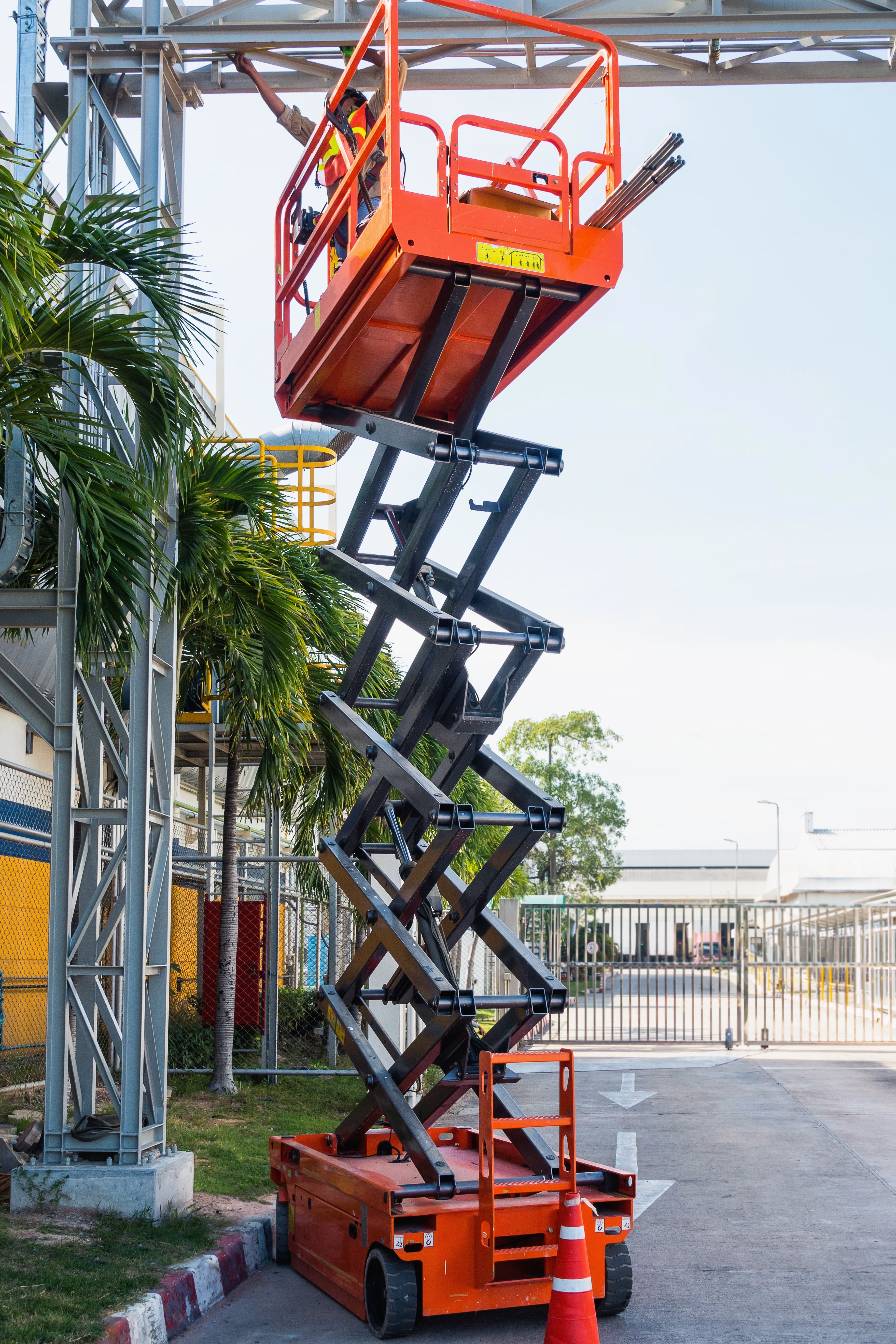
Construction sites rely on hydraulic lifts such as boom lifts and cherry pickers to give workers elevated access in challenging environments. Because construction lifts operate outdoors and often without a fixed electrical supply, a unique set of specifications is required in hydraulic power units, such as the must be:
- Powered by diesel engines (for mobile operations) or electric motors (for scissor lifts)
- Equipped with high-pressure pumps capable of 3,500–4,000 psi
- Designed with compact galvanised steel reservoirs
- Built with load-holding valves (counterbalance valve) to prevent platform collapse.
- Protected with emergency descent circuits
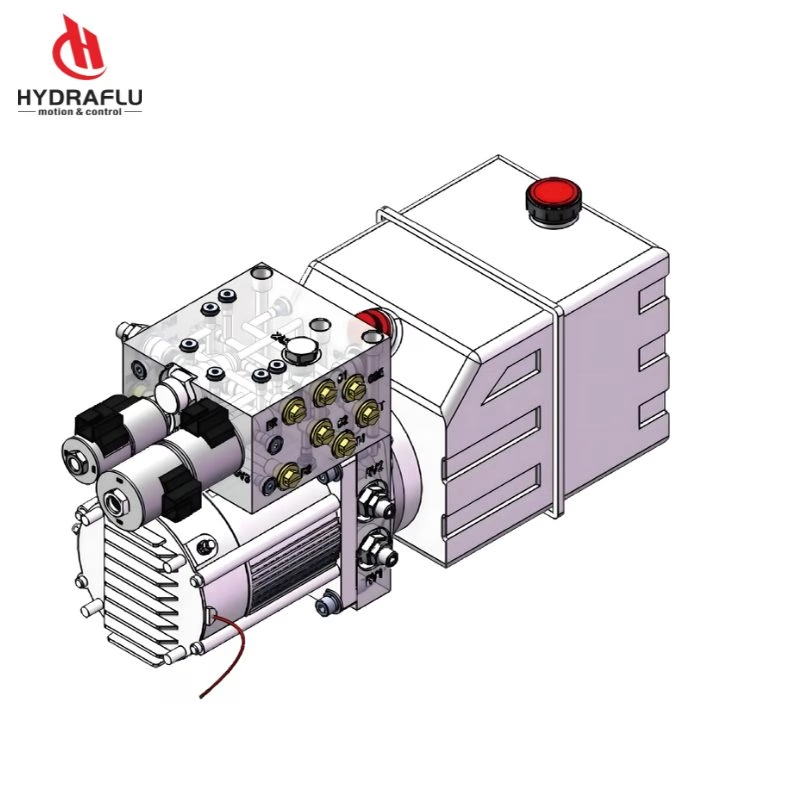
The particular requirements are because this hydraulic power unit drives multi-functional cylinders that extend the boom or raise the scissor structure, enabling flexible movement in multiple directions. The rugged, mobile HPU design ensures reliable operation in variable weather conditions, uneven terrain, and high-duty cycles typical of demanding construction applications.
Application of Hydraulic Lift in the Healthcare Industry
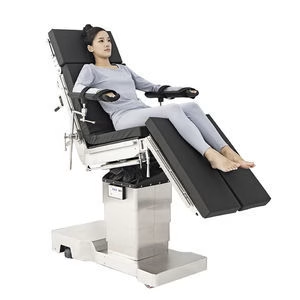
The healthcare sector uses hydraulic lifting systems for patient mobility and ergonomic positioning. This sensitive application demands quiet, smooth, and vibration-free lift operation. Traditional lift systems are not readily available to meet this criterion, but you can learn that hydraulic lifts and elevators operate smoothly and meet the criteria for this application perfectly. The following requirements should be met:
- Low-noise gear pumps
- Low-wattage electric motors
- Small 1–3 L reservoirs
- Soft-start hydraulic valves
- Anti-vibration mounts
- Redundant lowering controls for emergency use

These units power the hydraulic cylinders that assist with patient transfers, exam table adjustments, or surgical bed articulation. Comfort, precision, and safety are critical in medical environments. The hydraulic power unit’s ability to deliver gentle and controlled motion is essential for patient comfort and caregiver safety.
Application of Hydraulic Lift in Building Elevators

Hydraulic elevators remain a popular solution for low- to mid-rise buildings, offering smooth and reliable transport of people and goods. The hydraulic power unit is typically located in a machine room adjacent to the elevator shaft and includes:
- Submersible gear pump for quiet operation
- Motors ranging from 10–60 HP
- Large 150–400 L reservoirs
- Electronic control valves for ride quality
- Rupture valves for safety in case of hydraulic failure
- Oil coolers to manage fluid temperature in high-use buildings
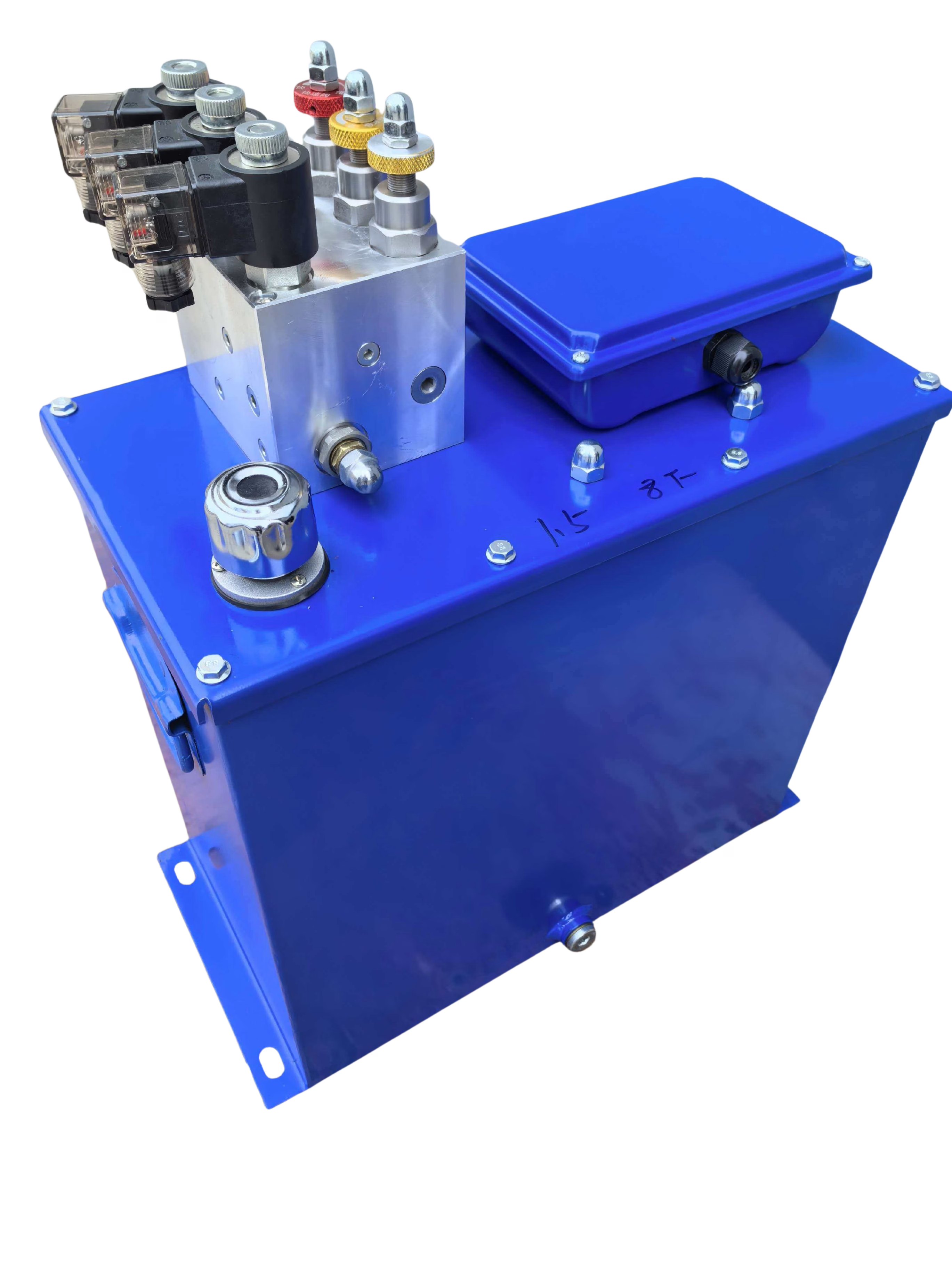
It drives a single-acting or telescopic cylinder for the elevator car. The HPU determines ride smoothness, speed control, and safety. Inconsistent or poorly maintained HPUs can cause elevator vibration, slow response times, or overheating.
Conclusion
Hydraulic lifts are important tools in many fields because they make it safe, quick, and accurate to lift cars, materials, workers, patients, stage elements, and passengers. The Hydraulic Power Unit is the most important part of each of these systems. It makes and controls the pressurised fluid that is needed to lift things.
From compact HPUs in automotive shops to sophisticated multi-pump systems in stage productions, Hydraflu provides state-of-the-art solutions for powering all types of hydraulic lifts. Feel free to contact us for all your hydraulic components. We engineer hydraulic power units for hydraulic lifts to meet the unique performance, safety, and reliability demands of each application.

