


Vous est-il déjà arrivé de vous demander pourquoi un écrou ne s'emboîte pas correctement dans un boulon ? Que signifie ce motif en spirale sur le boulon ? Les filetages sont les héros méconnus de l'ingénierie : ils permettent d'assembler, de maintenir et de faire fonctionner le monde. Ce sont les composants qui maintiennent tout, des perceuses portatives aux moteurs marins Wärtsilä. Dans ce guide, vous découvrirez tout sur les différents types de filetages.
Comment identifier et classer les fils de discussion
Identifier et classer les filetages est complexe en raison de la multitude de profils, de pas et de normes à prendre en compte. Voici toutefois une méthode simple : commencez par examiner le profil du filetage. Ces profils sont généralement en forme de “ V ”, carrés ou présentent d’autres formes que vous découvrirez dans la section suivante.
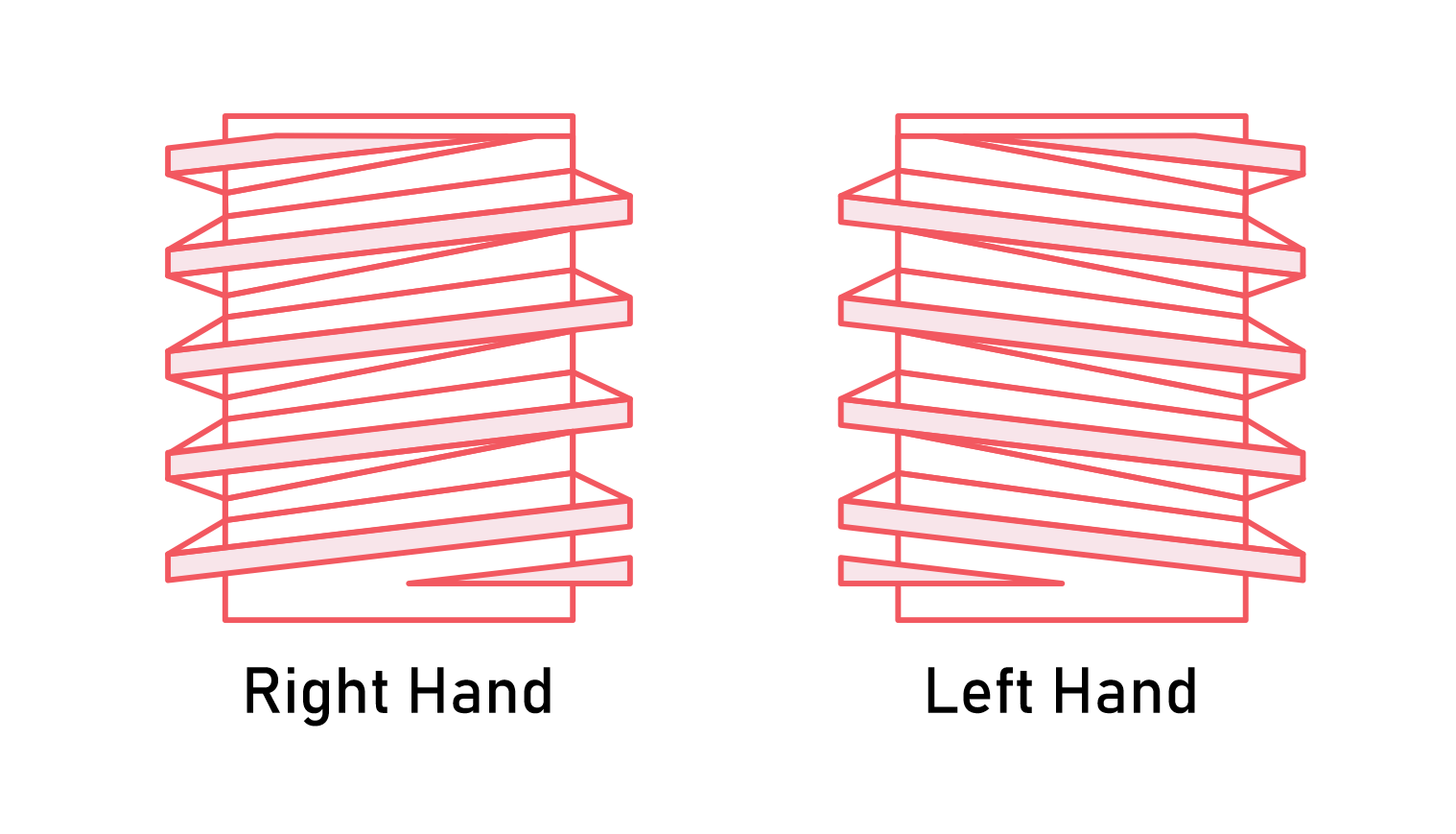
Ensuite, vous pouvez déterminer le sens du filetage. La plupart des filetages sont à droite (se vissent dans le sens horaire), mais on utilise des filetages à gauche lorsque les filetages à droite risquent de se desserrer dans certaines conditions. Une fois ces informations en main, l'étape suivante consiste à vérifier le pas, c'est-à-dire la distance entre chaque crête. Cela permet de différencier les filetages de même diamètre. Enfin, mesurez le diamètre pour déterminer s'il s'agit d'un filetage intérieur ou extérieur. Grâce à toutes ces informations, vous pouvez identifier le type de filetage : simple ou multiple, et vous pourrez déterminer la norme à laquelle il se conforme, comme le système métrique (ISO), la norme britannique (BS) ou autre.
Aperçu des types de filetage les plus courants
La connaissance des spécificités de chaque type de filetage permet d'optimiser les services, l'installation et les décisions d'ingénierie. Elle garantit à la fois fonctionnalité et fiabilité. Vous trouverez ci-dessous les types de filetages utilisés dans l'industrie et l'installation de machines hydrauliques.
Filetages à droite
Les filetages à droite sont les plus courants pour la fixation et sont conçus pour se serrer dans le sens horaire, ce qui les rend intuitifs pour la plupart des gens.
Filetage à gauche
Les filetages à gauche sont utilisés lorsqu'un filetage à droite risque de se desserrer sous l'effet du mouvement ou de la charge. Ces filetages se serrent dans le sens antihoraire, contrairement à la plupart des fixations standard, ce qui les rend utiles lorsque des forces de rotation pourraient dévisser un filetage à droite.
On les trouve couramment dans les machines rotatives ou les pièces soumises à des charges inverses, car cela empêche tout desserrage accidentel. Par exemple, elles sont souvent utilisées sur les pédales de vélo pour éviter que la rotation ne desserre accidentellement le filetage.
Types de filetages en fonction des profils et des formes
Le profil du filetage joue un rôle déterminant dans sa résistance et sa fonctionnalité. Chaque profil répond à des besoins spécifiques, et le choix du profil approprié dépend fortement des exigences de l'application. Choisir le bon profil de filetage garantit des performances optimales, offrant résistance, précision ou flexibilité selon les besoins.
| Type de fil | Profil du fil de discussion | Dimensions |
| Filetages à droite | rainure hélicoïdale | Serrer dans le sens des aiguilles d'une montre |
| Filetages à gauche | rainure hélicoïdale | Se serre dans le sens antihoraire |
| Filetages à démarrage unique | hélice simple | Un sillon par hauteur |
| Sujets à démarrage multiple | hélices multiples | Rainures multiples pour un mouvement plus rapide |
| “Fils en forme de ” V » | Profil en V | hauteur standardisée |
| Fils carrés | Profil carré | Faible friction, capacité de charge élevée |
| Filetage Acme | Profil angulaire | Facile à fabriquer, précision modérée |
| Filetages des articulations | Profil arrondi | Convient pour l'usure |
| Fils de contrefort | Profil asymétrique | Force axiale élevée, unidirectionnelle |
| Filetages coniques | Profil conique | Joint étanche, haute pression |
| Fils de ver | Structure hélicoïdale | Convertit le mouvement de rotation en mouvement linéaire |
 “Fils en forme de ” V »
 “Fils en forme de ” V »
“Les filetages en V sont les plus courants, reconnus pour leur résistance et leur étanchéité. Ils sont généralement utilisés pour les fixations générales car ils offrent un bon compromis entre résistance et facilité de mise en œuvre. Le profil en V contribue à maintenir l'étanchéité dans diverses conditions, ce qui en fait un choix polyvalent.
Vous verrez ces filetages partout, des petites machines hydrauliques aux boulons industriels robustes, en raison de leur adaptabilité et de leurs performances fiables.
Fils carrés
Les filetages carrés sont conçus pour la transmission de puissance et sont couramment utilisés dans les vis-mères où un faible frottement est requis. Leur forme permet un mouvement efficace avec une usure minimale, ce qui les rend idéaux pour les applications impliquant des charges importantes.
Les faces planes du filetage carré contribuent à réduire le glissement sous contrainte, assurant ainsi une performance fiable dans les machines de précision. On retrouve fréquemment ce type de filetage dans des systèmes tels que les actionneurs linéaires, où une force régulière et constante est indispensable.
Filetage Acme
Les filetages trapézoïdaux sont similaires aux filetages carrés, mais leur profil légèrement angulaire facilite leur fabrication. Ils sont fréquemment utilisés dans des applications telles que les étaux, les crics et autres outils nécessitant à la fois robustesse et fluidité de mouvement.
Les côtés biseautés des filetages Acme leur confèrent une plus grande robustesse sous charge que les filetages carrés, tout en maintenant un frottement relativement faible. Cet équilibre de caractéristiques en fait un choix populaire pour les systèmes mécaniques exigeant une précision et une fiabilité modérées.
Filetages des articulations
Les filetages à profil arrondi se caractérisent par des crêtes et des fonds arrondis, ce qui les rend adaptés aux applications soumises à une usure fréquente. Ce profil arrondi contribue à une meilleure répartition des contraintes, réduisant ainsi le risque d'endommagement du filetage au fil du temps. On retrouve fréquemment ces filetages dans des applications légères, comme les attelages ferroviaires, où la durabilité est primordiale.
Fils de contrefort
Les filetages à contreforts sont utilisés dans les applications où la force s'exerce principalement dans une seule direction. Ils offrent une résistance élevée et une excellente capacité de charge. Ils sont particulièrement utiles dans les presses hydrauliques et autres équipements hydrauliques où une force axiale importante est fréquente.
La conception asymétrique des filets à contreforts leur permet de supporter efficacement des charges importantes, sans compromettre leur intégrité structurelle. Ces filets sont souvent choisis pour les machines lourdes nécessitant une transmission de force unidirectionnelle.
Filetages coniques
Les filetages coniques sont conçus pour assurer une étanchéité parfaite et sont couramment utilisés en tuyauterie et plomberie. Le profil conique s'insère dans le filetage correspondant lors du serrage, créant ainsi une étanchéité optimale. De ce fait, les filetages coniques sont idéaux pour les applications haute pression où l'étanchéité est absolument indispensable. Ils sont largement utilisés dans les systèmes de gaz et de fluides.
Fils de ver
Les filetages à vis sans fin sont généralement utilisés dans les engrenages pour convertir un mouvement de rotation en mouvement linéaire. Leur structure hélicoïdale, en interaction avec une roue à vis sans fin, assure un contrôle précis du mouvement. Ils sont ainsi parfaitement adaptés aux mécanismes de levage hydrauliques et aux systèmes de direction automobile, où la précision du mouvement est essentielle.
Les filetages à vis sans fin sont essentiels pour les systèmes nécessitant une réduction de la vitesse et une augmentation du couple, offrant un avantage mécanique significatif.
Normes et classifications des filetages
La compréhension des normes de filetage est cruciale, surtout dans l'environnement mondialisé actuel où les projets internationaux sont courants.
Types de filetages de base et normes internationales
a) Fils de fixation généraux
| Type de fil | Norme internationale/régionale | Applications typiques | Caractéristiques principales |
| UNC/UNF | ASME B1.1 (États-Unis) | Machines nord-américaines, pièces automobiles | Filetages grossiers (UNC) et fins (UNF), idéaux pour les environnements à fortes vibrations |
| Filetages métriques | ISO 68-1 (Global) | Machines et électronique européennes/asiatiques | Filetages métriques, mesurés en millimètres (ex. : M6, M12) |
| BSPP/BSPT | ISO 228-1 (Parallèle)/ISO 7-1 (Continu) | Systèmes hydrauliques européens, raccords de tuyauterie | Le BSPP nécessite des joints toriques, le BSPT est auto-étanche. |
| NPT/NPTF | ASME B1.20.1 (États-Unis) | Tuyauterie nord-américaine, systèmes hydrauliques | Filetage conique, NPTF (joint sec) offre une meilleure étanchéité |
b) Fils spéciaux
| Type de fil | Norme internationale | Domaines d'application | Caractéristiques techniques |
| MJ Threads | ISO 5855-2 (Aérospatiale) | Éléments de fixation aérospatiaux (boulons, écrous) | Conception à racine arrondie, haute résistance à la fatigue, nécessite des outils spéciaux |
| Trapèze ACME | ASME B1.5 (États-Unis) | Machines lourdes (vérins, vis sans fin) | Profil trapézoïdal, adapté aux charges élevées et aux mouvements bidirectionnels |
| Fils UNJ | NAS 1591 (Aérospatiale, États-Unis) | Structures d'aéronefs, composants soumis à de fortes contraintes | Racine arrondie, résistance accrue aux fissures, conforme à la norme MIL-STD |
| PG Threads | DIN 40430 (Allemagne) | presse-étoupes pour câbles électriques | Filetage métrique pour l'étanchéité à l'eau et à la poussière |
Comparaison des normes de filetage pour tuyaux et systèmes hydrauliques
| Nom standard | Région | Type de fil | Méthode de scellement | Plage de pression typique |
| ISO 1179 | Mondial | BSPP (série G) | Filetage parallèle + joint torique | ≤40 MPa |
| SAE J514 | Amérique du Nord | Conicité JIC 37° | Joint conique métal sur métal | ≤70 MPa |
| DIN 2353 | Europe | Conicité à 24° (série DKO) | Joint d'étanchéité à compression | ≤63 MPa |
| JIS B0203 | Japon | PT (effilé) | Similaire à la BSPT, nécessite un ruban d'étanchéité | ≤30 MPa |
Normes de filetage pour les équipements de construction et de sécurité
| Nom standard | Scénarios d'application | Type de fil | Exigences clés |
| EN 13564-1 | Étanchéité des bâtiments (clapets anti-retour) | Série BSPP/G | Matériaux résistants à la corrosion, essais de pression statique |
| EN 362 | Connecteurs antichute (équipement de sécurité) | Conception de portail à fermeture automatique | Résistance statique ≥ 15 kN, résistance au brouillard salin |
| ASME A120 | tuyauterie de protection incendie | NPT | Revêtement ignifuge, tests d'étanchéité haute pression |
Choisir le bon fil pour votre application
Chaque scénario met en évidence un type de fil différent, son profil et le matériau approprié, vous aidant ainsi à faire un choix éclairé qui garantit à la fois stabilité et efficacité.
Conclusion
Les filetages sont peut-être petits, mais leur impact est colossal. Que vous soyez ingénieur, technicien ou bricoleur, comprendre les différents types de filetages et leurs applications vous permettra de faire des choix éclairés – et peut-être même d'impressionner un collègue lors de la prochaine réunion de conception. Alors, la prochaine fois que vous verrez une vis, regardez au-delà de ce simple morceau de métal torsadé. Voyez la réflexion, la conception et le potentiel que recèle cette simple spirale.

