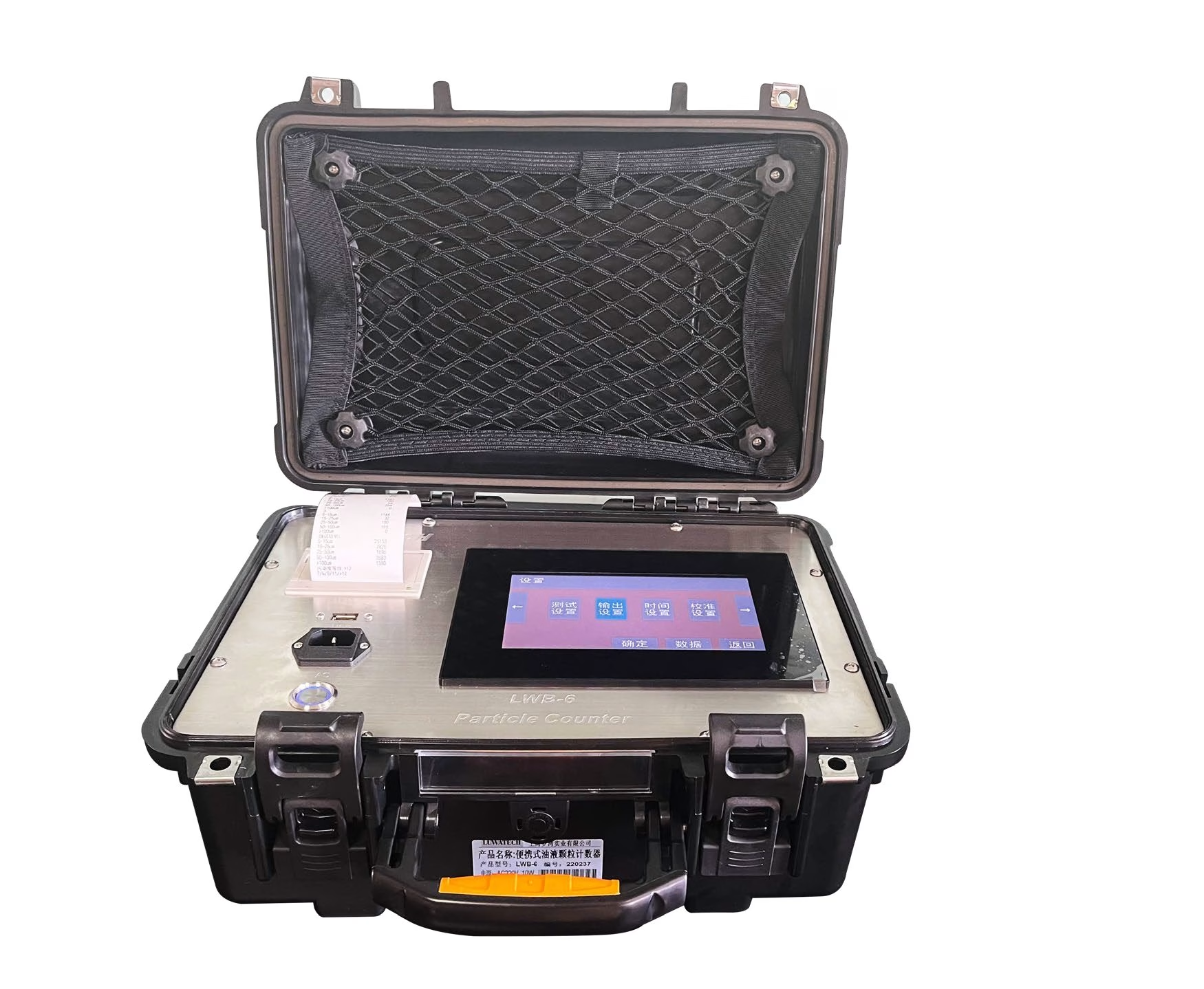

According to surveys from hydraulic component manufacturers, industry research institutions, and maintenance experts worldwide, the contamination of hydraulic oil is the primary cause of hydraulic system failures. It is generally believed to account for over 85% of such failures. The substances that contaminate hydraulic oil include particulate matter, water, and chemical substances. Contaminated hydraulic oil accelerates the wear of components of the hydraulic system and leads to operational malfunctions, which can result in costly downtime and safety hazards.
Our company’s practice has proven that effective contamination control can reduce component wear by over 40% and significantly decrease the failure rate of machinery and equipment. Explore more about how to remove water from hydraulic oil.
How to Define Oil Contamination
Cleanliness control refers to setting a quantifiable cleanliness level target and confirming through measurement whether the hydraulic oil meets and remains within this target range. It focuses on the “state” of oil contamination.
Setting Standards
Based on the requirements of the most precise components in the hydraulic system (such as servo valves and proportional valves), a target cleanliness level is set. Usually, the ISO 4406 standard is adopted (e.g., 18/16/13 or 15/13/10. The smaller the numbers, the cleaner the oil).
Measurement and Monitoring
Regularly extract oil samples from the system and use equipment such as particle counters for laboratory analysis to obtain the current cleanliness level code.
How to Control Oil Contamination
Contamination control means taking a series of proactive measures and methods to prevent contaminants from entering the system and remove contaminants already present in the system.
- Inspect all components of the hydraulic system to prevent machining debris from entering the oil system.
- Seal contamination entry points (such as seals, tank breather filters, etc.).
- Implement regular monitoring/purification (online filters, fluid analysis).

ISO 4406: The Universal Hydraulic Cleanliness Benchmark
This ISO 4406, Coding the level of cleanliness quantifies fhydraulic fluid contamination through particle counting at three thresholds (4µm, 6µm, 14µm), providing a standard for the determination and control of oil contamination.
Firstly, as hydraulic professionals, we can use professional instruments such as oil particle counters for detection. According to the ISO 4406 standard, we list the contamination levels. Then, based on the required levels of relevant hydraulic components, we can judge whether the oil needs to be cleaned or replaced, so as to ensure the proper functioning of hydraulic equipment.
Decoding
The impact of different particle sizes varies for different hydraulic components. More precise parts have higher oil cleanliness requirements.
• ≥4µm: Damages precision components (servo/proportional valves)
• ≥6µm: Accelerates pump/cylinder wear
• ≥14µm: Causes blockages/valve stiction
Code Interpretation:
I will first provide a report generated by Hydraflu’s oil particle counter to explain and demonstrate how to apply the ISO 4406 standard and its coding system.
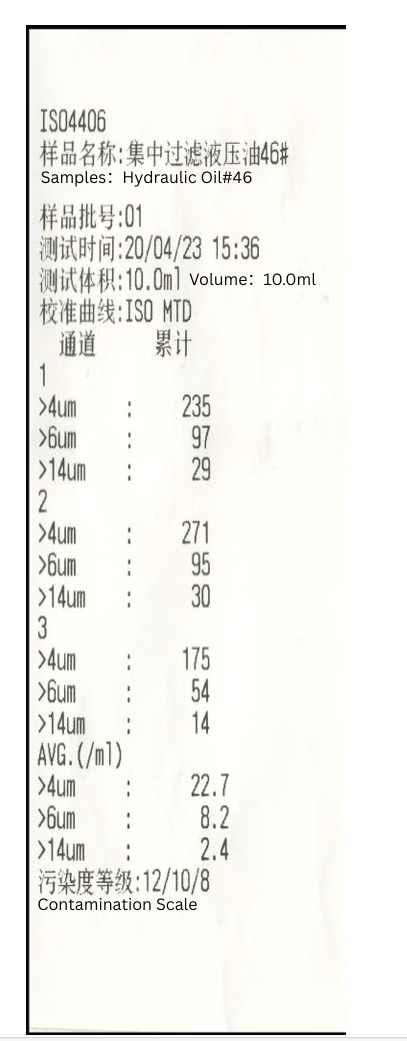 Take a look on the note to the left, this is a report based on the ISO 4406 standard. The test oil sample volume was 10ml, and a total of 3 tests were conducted. The report lists the particle counts corresponding to three size thresholds for each test. Finally, we used the average count per milliliter to determine the oil’s condition, which is: ≥4µm: 22.7, ≥6µm: 8.2, ≥14µm: 2.4.
Then, using the simplified ISO 4406 reference chart I’ve created below, we looked up the corresponding codes. This allowed us to determine that the cleanliness code for this oil sample is 12/10/8.


Setting Hydraulic Cleanliness Targets
Tailor goals to equipment criticality:
| Application | ISO 4406 Target | Equipment Examples |
|---|---|---|
| Precision Servo Hydraulics | 15/13/10 | Injection molders, CNC machines |
| Turbine Control Systems | 16/14/11 | High-temp/pressure governors |
| Mobile Machinery | 17/15/12 | Excavators, crane main circuits |
| Heavy Industrial Gearboxes | 18/16/13 | Metallurgy/mining transmissions |
Key Implementation Steps
- Sampling Protocol:
- Sample from flowing fluid (main return lines)
- Use representative points (return lines, filter downstream)
- Monitoring Frequency:
- New/overhauled systems: Weekly
- Normal operation: Monthly/quarterly
- Critical systems: Real-time online monitoring
- Control Measures:
- High-efficiency filters (e.g., β₅₀₀≥2000 for servo systems)
- Closed fluid transfer systems
- Regular fluid analysis (particle counts, water content, acid number)
The ROI of Contamination Control