



Hydraulic lifters play a critical role in ensuring your engine functions smoothly and efficiently. They use oil pressure to adjust the plunger and regulate hydraulic valve clearance by adjusting automatically as the engine runs. The smooth lifter operation increases resistance to engine wear and tear. However, faulty hydraulic lifters can lead to performance issues and damage to the rocker arm, the valve tip, and the push rod, resulting in costly engine damage.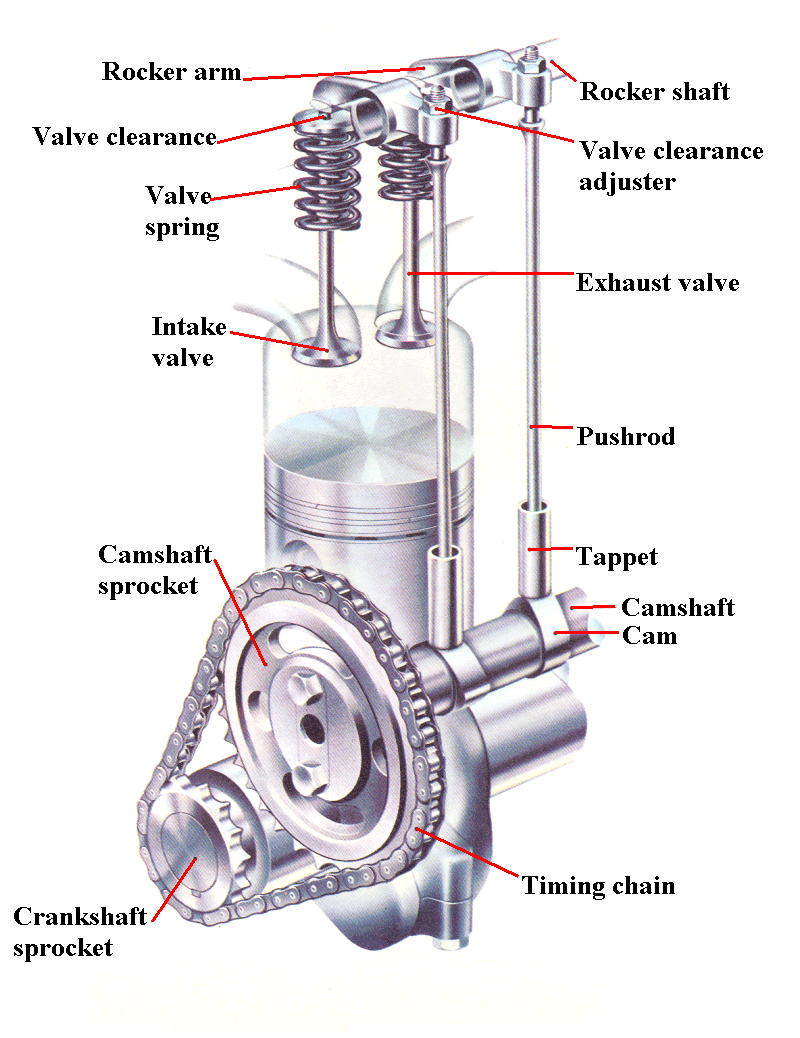
What are Common Hydraulic Lifter Faults?
A hydraulic lifter is a cylindrical component often found in internal combustion engines (ICE). Just like other mechanical components, the occurrence of faults in hydraulic lifters is also common. The most common signs are noise, such as ticking and tapping, and observable low performance. It stops performing its primary function of maintaining proper valve clearance by compensating for thermal expansion in the engine’s components.
 Why is Hydraulic Lifters Fault Detection Important?

By providing a clearance effect, hydraulic lifters reduce engine noise in the valve train as well as wear and tear in engine components. When a hydraulic lifter works as intended, you may not even notice it. However, when it malfunctions, the engine’s harmony is disrupted. It leads to engine noise and performance issues.
So, when the fault occurs, the overall efficiency of the engine decreases. This is why the detection, repair and replacement of the hydraulic lifter becomes a vital step to keep the system running efficiently. If you neglect this, you may have to bear substantial repair expenses, for example, for camshaft torsion or even valve system failure.
If you are looking for large or compact hydraulic lifting systems, check out our products catalogue to explore more solutions.

Signs of a Faulty Hydraulic Lifter
So, to save massive repair costs, early fault detection is important. You can keep an eye (and ear) out for some signs that can tell you that your hydraulic lifter might be failing:
1. Ticking, Tapping, or Knocking Sounds (Noise)
Loud ticking or tapping noises coming from the engine are often the first signs of a faulty hydraulic lifter. This occurs when the lifters are unable to maintain proper clearance. This causes unsettling tipping, tapping or knocking sounds as the components of the valve train collide.
2. Reduced Performance (Engine Power Problems)
Your engine’s performance can be affected by disruption of air and fuel flow, which is usually caused by a faulty hydraulic lifter. You can identify this abnormality in performance by observing sluggish acceleration and low torque in usual cases. Sometimes you may feel irregular idling. All these are indications that your hydraulic lifter is struggling and about to fail.
3. Excessive Exhaust Smoke (Rough Running Conditions of Engine)
Faulty lifters may result in poor combustion, often leading to excessive exhaust smoke due to unburned fuel.
4. Check Engine Light
Well, only the “check engine” light may not tell you about the hydraulic lifter’s fault but if you observe the above 3 indications, it probably is. So, do not ignore the check engine light as well. It is preferable to not just wait to check engine light but observe other things and repair it in time.
If you’ve noticed any of these symptoms, it’s time to inspect your lifters and take action.
In modern mobile or electric-assisted hydraulic lifting systems, overall reliability depends not only on mechanical components but also on stable power supply. For applications with specific voltage or space requirements, custom battery packs are often used to support electronic controls and auxiliary systems alongside traditional hydraulic mechanisms.
Tools and Materials You’ll Need to Repair
Before diagnosing or repairing a faulty hydraulic lifter, you need to gather the following tools and materials:
- Socket set and ratchet
- Screwdrivers (flathead and Phillips)
- Feeler gauge
- Torque wrench
- Engine stethoscope or mechanic’s stethoscope
- Penetrating oil
- Shop rags or towels
- Replacement hydraulic lifters (if necessary)
- Engine oil and oil filter (for post-repair maintenance)
- Repair manual for your vehicle (optional but helpful for specific engine setups)


After you gather all this, it’s time to roll up your sleeves.
How to Diagnose a Faulty Hydraulic Lifter?
Identifying the root cause of the issue is the first step to fixing it. You can follow the following steps to determine whether your hydraulic lifters are the reason for your engine troubles.
Step 1: Listen for Noises
You can start your engine and use an engine stethoscope to isolate the ticking or tapping sound. Zero in on the valve cover area or cylinder head to confirm whether the noise originates from faulty lifters or something else.
Step 2: Inspect Valve Train Components
If it is from the valve area, remove the valve cover(s) to inspect the valve train. You need to check for excessive clearance by using a feeler gauge between the rocker arms and valve stems, which could indicate a lifter problem.
Step 3: Perform a Compression Test
Low compression in the cylinders could point to damaged hydraulic lifters. To measure this, you can use a compression gauge. It will let you know the pressure levels which you can compare with the manufacturer’s specifications.
Step 4: Check for Oil Blockages
Slide open the lifters or inspect the oil passages for clogging. Sometimes, old, dirty oil or debris can block the lifters’ ability to maintain proper hydraulic pressure.
If these steps confirm a faulty lifter, it’s time to proceed with repairs or replacement.
Repairing or Replacing Hydraulic Lifters
The working condition or damage to your lifters will tell you to take a decision whether to clean, repair or replace them.
Step 1: Disassemble the Valve Train
- Disconnect the negative battery terminal for safety.
- Remove the valve cover(s) to access the lifters.
- Carefully disassemble rocker arms and pushrods as needed,
- Take note of their positioning.
Step 2: Clean and Inspect the Lifters
- Remove the hydraulic lifters and inspect them for damage, wear, or debris buildup.
- Clean the lifters using penetrating oil and compressed air to remove dirt or sludge causing blockages. For manufacturers machining hydraulic lifters and other precision engine components, high-performance carbide cutting tools can help achieve dimensional accuracy and higher surface finishes.
- If the lifters show severe wear or damage, you need to buy replacements matching your engine’s specifications and install them.
Step 3: Reassemble and Adjust
- Reinstall the cleaned or new lifters, pushrods, and rocker arms in their original positions as per the notes you have taken in step 1.
- To adjust the valve clearance as per manual specifications, you can use a feeler gauge.
- Securely fasten the valve cover(s) and replace the gaskets.
Step 4: Oil Change and Test Run
- Replace the engine oil and filter to ensure proper lubrication.
- Finally, start the engine and allow it to idle.
- Monitor for ticking sounds or performance issues to confirm the repair was successful.
Tips to Prevent Future Hydraulic Lifter Issues
Regular maintenance of all mechanical components including hydraulic lifters can avoid problems in the future. However, you can learn following key tips from experts to make your engine run smoothly:
- Stick to a consistent oil change schedule using the recommended oil type and viscosity for your vehicle.
- Cheap or substandard filters can allow debris into your engine, clogging lifters over time. So, use high-quality filters.
- Hard driving and frequent high RPMs can cause premature lifter wear. Drive with care whenever possible.
- Regular engine inspections and periodic cleaning can catch early signs of lifter issues before they escalate.
Maintaining Your Engine for the Long Haul
Of course, proper maintenance is at the heart of preventing many lifter-related problems. Stay on top of your oil changes, use quality parts, and keep an ear out for any unusual noises. These habits can help keep your hydraulic lifters (and your engine) running smoothly for years to come.
Hydraulic lifters are small but mighty components that play a vital role in your engine’s performance. By diagnosing and addressing issues early, you can avoid costly repairs and ensure your vehicle remains in peak condition. For more information, contact Hydraflu today.

