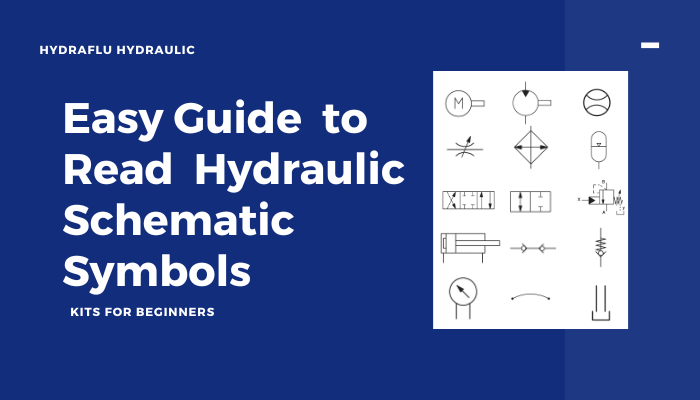


What Is Hydraulic Valve?
The function of hydraulic control valves (also called hydraulic valves) in hydraulic systems is to enable hydraulic actuators, such as cylinders and motors, to achieve the required movement of speed, direction, and torque of force. How does it accomplish this? This is achieved by controlling the speed, pressure, and direction of flow of hydraulic fluid in the control system piping. Well, We can say that hydraulic valves are components of the most functional categories, with the widest range of applications, and are the most active components in hydraulic systems. The mature design and functional operation of hydraulic systems largely depend on the stable quality of the hydraulic valve and function matching. So how many types of hydraulic valves?
Types of Hydraulic Valve
Main classification:
Hydraulic valves mainly includes directional control valves, pressure control valves and flow control valves.
1. Directional control valves:
These include check valves and directional valves. Check valves allow unidirectional flow of fluid, while directional valves control such as the solenoid valve, the opening and closing of the oil circuit and the direction of oil flow by changing the relative position between the spool and the valve body.
2. Pressure control valves:
Used to regulate pressure, they include relief valves, sequence valves, pressure-reducing valves, etc. Relief valves are used to control the hydraulic system to maintain a constant state when the set pressure is reached, while sequence valves are used to control the sequence of pressures in the hydraulic system.
3. Flow control valves:
These are used to control flow, including throttle valves, speed-reducing valves, speed-regulating valves, diverter valves, etc.
Some Other Ways to classify hydraulic valves
By the methods of valve mounting, there are Pipe mounting valve, sectional valve, subplate valve, sandwich valve,and thread connection(cartridge) valve.
By the control signal type, it can be divided into manual, electric control, and liquid(pilot) control.
By the principle of operation, it is divided into switching valves, servo valves, proportional valves, and logic valves.
By the structure, it can be divided into spool valve, rotary valve, seat valve(ball and poppet), jet pipe valve, etc.
Next we’ll go into more detail about Pipe mounting valve, sectional valve subplate valve, sandwich valve and thread connection(cartridge) valve.
Pipe Mounting Valve

Advantage:
Pipe valves are the only independent and complete valves among the various types of mounting connections, which are connected to a pipe fitting and piping and are ready for use without the need for any other fittings.
Disadvantage:
With the increasing complexity of the hydraulic system, the weaknesses of this type of installation are becoming more and more prominent:
- Components scattered arrangement, large area.
- Possible leakage of parts.
- Installation and dismantling is inconvenient.
Sectional Valve

A single control unit can control a group of actuators – hydraulic cylinders or motors.By making the inlet P and outlet T of each piece in the same position, they can be grouped together and share P and T.
Advantage:
- Flexible, can be added at will control valve piece to control the actuator,
- Compact structure.
Disadvantage:
- There is a possibility of leakage between pieces.
- Because the piping is fixed on the valve body, so if you need to replace a piece of valve piece, you need to disassemble all the valve group and piping, which is more troublesome.
Subplate Valve

The oil port for connecting the pipeline is not made directly on the valve, but on the base plate, and the valve is fixed on the base plate by bolts, so it is not necessary to dismantle the pipeline when replacing the valve, which is much more convenient than the tube type and the piece type, and it can greatly shorten the maintenance time and cost.
The standardization process of plate connections is relatively smooth, e.g. ISO 4401 is widely accepted.
Advantage:
- Potential external leakage hazards are reduced.
- The space and weight occupied by the system is reduced, there is less pressure loss in the pipe, heat generation is reduced
- The vibration resistance of the system is increased, the system reliability is increased.
- Response times are significantly reduced in the system.


Disadvantage:
- The length of the integrated block increases, the weight increases multiply.
- The larger the integrated block, the longer the internal connecting holes are, making the machining process sharply more difficult.
Sandwich Valve

It is the extension, expansion and integration of the subplate valve to the height aspect.

Advantage:
- Generally, a stack of control a group of actuators, can realize complex functions, there are very flexible and easy to replace.
- Somewhat reduced size and difficulty in machining holes.
Disadvantage:
- Increased risk of leakage.
Cartridge Valve
There are four types of cartridge valves commonly used in the market.
Slip-in

Slip-type, also called Cover-type cartridge valves are an unbeatable choice for large flow rates (>1000L/min) due to their single function and relatively simple structure, which makes them easy to make larger.
Drop-in
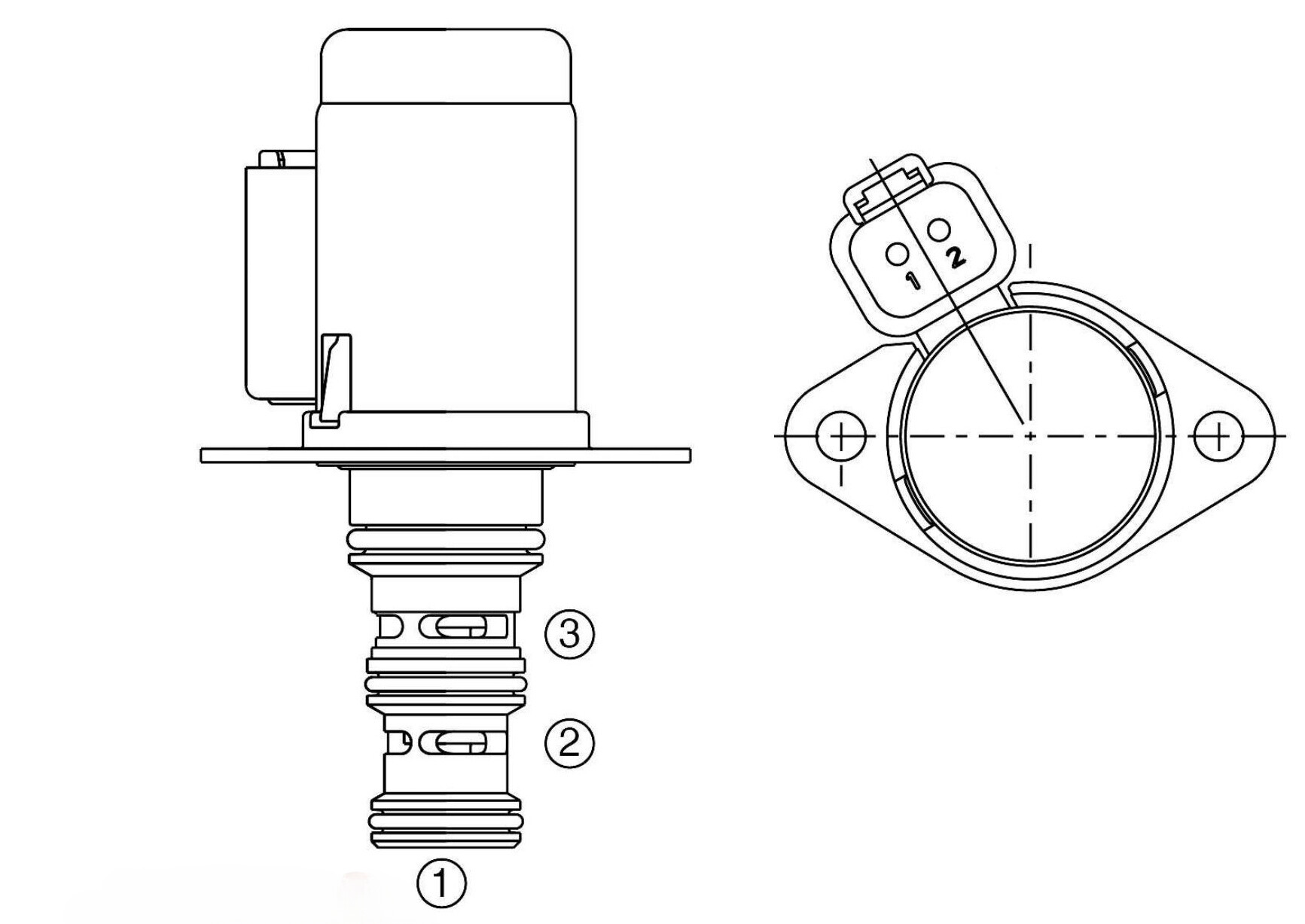
The drop-in type is fixed on the valve block by two screws on the side, which is simple in structure and low in cost. However, because the tensile force of the small screw is much lower than that of the large thread of the threaded cartridge valve, it can only withstand low pressure, and the loading and unloading is also more troublesome, and it occupies a larger area, which is not compact.
Screw-in

Threaded cartridge valves are utilizing threads that are screwed into an integrated block or into mounting holes in a valve block. It can perform one or more hydraulic functions independently of each other, such as relief valves, solenoid-operated directional valves, flow valves, counterbalance valves, etc., Threaded cartridge valves can be easily replaced without the need to remove pipe fittings.

A cut-out threaded cartridge valve assembly
Insert type

The insert type is also called parts in body. The valve is completely inserted into the valve block, not exposed to the outside of the block, and utilizes its own threads or other elements, such as pipe fittings, retaining rings, etc., to locate the valve, which is not used in large quantities and is mainly used for check valves and explosion-proof valves.
Classification is just to sort out the status quo, so as to be easy to learn, but is by no means the end of learning, in fact, nowadays, many systems are mostly a mixture of multiple valve types.
Current Status and Trends
According to recent market research, the global usage of hydraulic valves is roughly as follows: The use of integrated blocks with cartridge valves has become the preferred choice. Threaded cartridge valves and their integrated blocks account for more than 25% of the global hydraulic valve sales.
In mobile hydraulics, due to traditional reasons, directional control valves with sectional designs are still quite prevalent. These include manual, hydraulic, and electric controls. Even when electric controls are adopted, manual handles are often retained as an emergency measure in case of failure.
Other controls use integrated blocks with threaded cartridge valves. The application of forged tube core components with single functions is also decreasing. Even if pipe connections are necessary due to various reasons, threaded cartridge valve groups are often used to form valve blocks with pipe connections.
References
[1] Hai Ping Zhang, “Hydraulic Threaded Cartridge Valves,” China Machine Press, 2011.
[2] John J. Pippenger, “Hydraulic Cartridge Valve Technology,” Amalgam Publishing Company, Jenks, Oklahoma USA
[3] ISO 7789:1998, “Hydraulic Fluid Power — Two, Three- and Four-Port Screw-In Cartridge Valves — Cavities”
[4] ISO 7789:2007, “Hydraulic Fluid Power — Two, Three- and Four-Port Screw-In Cartridge Valves — Cavities”