


 Understanding Hydraulic Systems: Components, Types, and Working Principles
In contemporary industrial applications, power and accuracy go hand in hand. Hydraulics is the technology that enables anything from large construction equipment to precision industrial tools.
From the brakes on your automobile to large industrial gear, a hydraulic system transforms mechanical energy into fluid power. You will learn how these systems function and why they are essential to your business operations.
What is a Hydraulic System?
A hydraulic system design uses fluid power. It allows you to precisely operate complicated machinery and heavy weights by transforming mechanical energy into hydraulic energy and again.
Consider it a strong energy transfer system that relies on fluid rather than mechanical components. For many industrial applications, this increases its efficiency and dependability.
How Hydraulic Systems Work?
The hydraulic system working principle is based on Pascal’s Law, which states that pressure is transmitted uniformly through a fluid and in all directions. Here’s how it functions in practice:
When you engage a hydraulic system, the pump generates pressure in the fluid. This pressure flows via the system’s pipes and hoses to the actuator. The actuator then transforms the fluid pressure back to mechanical force.
This basic technique multiplies force dramatically. That is why you can lift many tons with minimal input force.
Main Components of a Hydraulic System
Understanding the hydraulic system’s components is critical for maintaining and enhancing your equipment’s performance. Each component is essential to the system’s functionality, combining to provide forceful and accurate motion.
Electric Motor
The electric motor is a power source of the whole system, which convert electricity to mechanical energy.
There are several categories in electric motors, check out Electric Motor Types. Some important technical parameters of a motor have significant impacts on the efficiency of hydraulic system. The rotation speed, the power factor and the torque of the motor can determine the pressure and flow rate of the fluid in the system.
Hydraulic Pump
The pump functions as the system’s powerhouse, transforming mechanical energy into fluid power through a variety of means. Pumps are grouped into three types: gear, vane, and piston pumps, each serving a distinct purpose. The pump regulates fluid flow and pressure to ensure that your system runs optimally and consistently.
The Valves
Think of valves as your system’s command center. They control every aspect of fluid movement throughout your operation.
Directional valves manage fluid flow paths. Pressure valves protect your investment by preventing system damage.
Your speed control needs are handled by specialized flow control valves. Choose between manual or electronic operation based on your specific requirements.
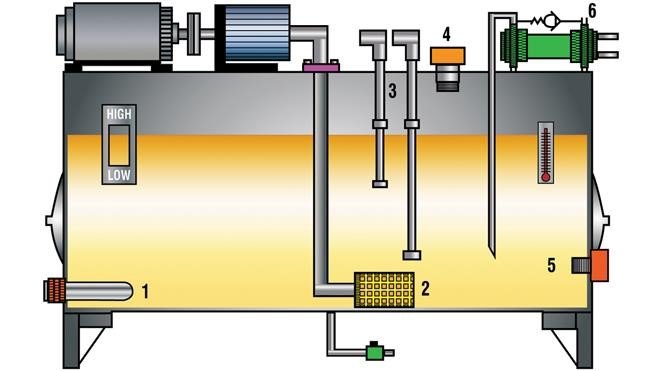
Reservoir
Your reservoir does more than store hydraulic fluid. It acts as a crucial component in maintaining system health.Heat dissipation happens naturally through the reservoir walls. This keeps your system running at optimal temperatures.
The design allows trapped air to escape efficiently. It also accommodates fluid expansion during operation.
Hydraulic Motor/Actuator
When converting hydraulic power back into mechanical motion, actuators and motors take center stage.
Linear actuators, such as cylinders, generate pushing and pulling actions, whereas hydraulic motors provide rotating motion. These components are available in a variety of sizes and combinations, allowing you to match the precise force and speed that your application demands.
The Filters
Your system needs protection against dangerous pollutants. Filters function continually to keep fluids clean.
Filtration requirements vary depending on the application. You may tailor security levels to meet your unique operational requirements.
Proper filter maintenance prevents expensive component damage, extends fluid life, and ensures smooth operation of your entire hydraulic system.
Hydraulic Hoses and Pipes
These components form your system’s vital circulation network. They handle extreme pressures while maintaining system integrity. Your specific application determines the type of hose needed. Factors include environmental conditions and pressure requirements.
Correct size and routing make a huge impact as they reduce pressure losses and promote efficient power transfer.
Types of Hydraulic Systems
Different applications require different types of hydraulic systems. However, hydraulic systems must be tailored to specific purposes. Understanding each type allows you to find the best solution for your needs. Your decision will have an influence efficiency, maintenance, and system performance.SEE More Details about open loop and closed loop hydraulic system.
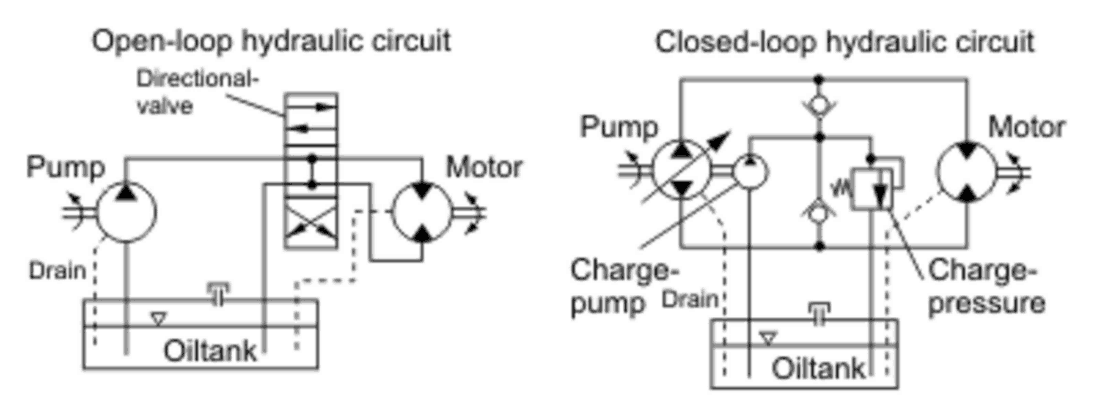
Open Loop System
The open loop technology simplifies and ensures the dependability of your operations. Following each cycle, the fluid returns to the reservoir, allowing for natural cooling and contaminants to settle. You’ll save money in the beginning, have less upkeep to deal with, and have easier troubleshooting.
Closed Loop System
Closed loop systems provide higher performance because of the constant fluid circulation. They’ll provide you more control and efficiency, which makes them perfect for tasks that require steady action. These systems include integrated cooling and filtering circuits to help you maintain optimal fluid conditions during long operating times.
Other Types
For specific needs, modern hydraulic technology provides tailored solutions. In order to save energy and lessen heat production, load-sensing systems automatically modify output in response to demand. Systems with constant pressure maintain a constant force despite changes in load.
Systems with variable displacement allow you to adjust to shifting operating requirements by providing you with flexible control over pressure levels and flow rates.
Hydraulic System Examples and Applications
You’ll see hydraulic system examples at work in virtually every major industry today. These robust technologies, which provide unparalleled force and accuracy, revolutionize the way enterprises function. Let’s see how various industries use this adaptable technology.
Construction Industry
Heavy machinery operations in construction are dominated by hydraulics. For digging operations and bucket motions, excavators need precise hydraulic controls. For incredibly precise lifting of heavy objects, cranes rely on hydraulic power. Concrete pumps efficiently move materials across your construction sites by using hydraulic systems.
Automotive Industry
Your car is significantly reliant on hydraulic technology for safety and comfort. The braking system turns fluid pressure into dependable stopping force, providing you complete control over any driving circumstance.
Power steering makes vehicle control simple with hydraulic assistance, minimizing driver strain on extended trips. By automatically reacting to road surfaces, modern suspension systems use hydraulics to deliver a smoother ride in a range of road conditions. Convertible tops and lift gates frequently employ hydraulic devices to guarantee seamless operation.
Manufacturing Sector
Manufacturing facilities showcase hydraulic power at its finest, enabling precision and power on the production floor. Powerful hydraulic presses shape metal components with tremendous force, creating everything from car body panels to industrial parts.
Assembly lines depend on hydraulic clamps for precise positioning and consistent pressure during production processes. Material handling equipment uses hydraulic systems to move heavy loads throughout your facility safely, improving efficiency and worker safety. Custom manufacturing solutions often incorporate hydraulic systems for specialized operations.
Agricultural Equipment
Hydraulic skills are essential to modern farming in order to boost output. From plows to seeders, tractors use hydraulics to precisely manage a variety of tools. For effective crop collecting, harvesters use sophisticated hydraulic systems that automatically adapt to varying crop heights and circumstances.
Hydraulic controls are frequently used in irrigation systems to distribute water precisely, boosting agricultural yields while conserving resources. Hydraulic power is used by hay balers and other specialist equipment to run continuously under difficult circumstances.
Aerospace Applications
Hydraulic systems must work with extreme precision in critical applications. Aircraft landing gear relies on dependable hydraulic mechanics to provide smooth takeoffs and landings in all weather conditions.
Hydraulic actuation is required for flight control surfaces to provide constant accuracy in airplane control. Cargo doors require hydraulic power to work smoothly and consistently; nevertheless, emergency systems typically rely on hydraulic backup power. Aerospace testing equipment also uses hydraulic systems to replicate flight conditions.
Marine Industry
Ships exhibit hydraulic adaptability under harsh maritime conditions. Steering systems react swiftly to shifting circumstances and use hydraulic power for dependable control in choppy waters.
Deck equipment can handle large weights in corrosive situations because of its effective hydraulic systems. By employing advanced hydraulic components to maintain vessel balance, stabilization systems enhance both cargo security and passenger comfort. Hydraulic power is used in maritime applications for anchor handling systems, fishing gear, and loading ramps.
Advantages and Limitations of Hydraulic Systems
Advantages
In each of these sectors, hydraulic systems provide outstanding advantages for your business operations. They allow fine control and large lifting by generating enormous force with minimal input power. You’ll have precise, smooth control over the motions of the equipment, which is essential for delicate treatments.
These systems enable accurate power delivery using a range of power transmission options. Overload protects your equipment naturally, avoiding expensive harm. When compared to other systems, maintenance needs are usually kept to a minimum, which lowers operating expenses. The systems can function reliably year after year in a various settings and situations.
Limitations
When incorporating hydraulics into your processes, you should be aware of certain limitations. In certain circumstances, these systems may be less efficient than electrical equivalents, especially in applications that need quick start-stop cycles. To avoid system deterioration, your maintenance crew should test fluid quality on a regular basis.
Even well-maintained systems may develop leaks over time, necessitating frequent examination and repair. Temperature fluctuations may impair system performance, necessitating climate control in harsh situations.
In as much as initial installation costs frequently surpass those of other power transmission techniques, the long-term advantages typically outweigh the expenditure. System design necessitates meticulous planning to achieve peak performance and efficiency in your unique application.
Conclusion
As your trusted partner for cutting-edge hydraulic solutions, we provide a wide selection of high-performance components such as power packs, manifold blocks, valves, pumps, and more.
Hydraflu provides outstanding service in addition to superior products. Our skilled engineers are committed to providing prompt technical assistance, customized solutions, and knowledgeable counsel. We can assist whether you need a simple part or a fully functional hydraulic system.


Pingback: High-Pressure Gauge Verification: DWT vs Calibrator - inspectionstrack