


When two hydraulic functions run at the same time, your machine may slow down. The hydraulic motor can lose torque, or the pump shaft seal may start leaking. These issues can be caused by hydraulic backpressure — but the problem is not always in the return hose. Before you change any parts, find out which component, port, oil path and working condition is causing the trouble.
What Is Hydraulic Back pressure?
Backpressure is pressure at the outlet of the part you are checking. This outlet can go to the oil tank, another actuator, a valve passage or a pressurized circuit. So backpressure is not only found in the main return line.
Backpressure is also different from pressure drop. Pressure drop is the difference between two measurement points. Backpressure is the downstream pressure that a specific component must discharge against.
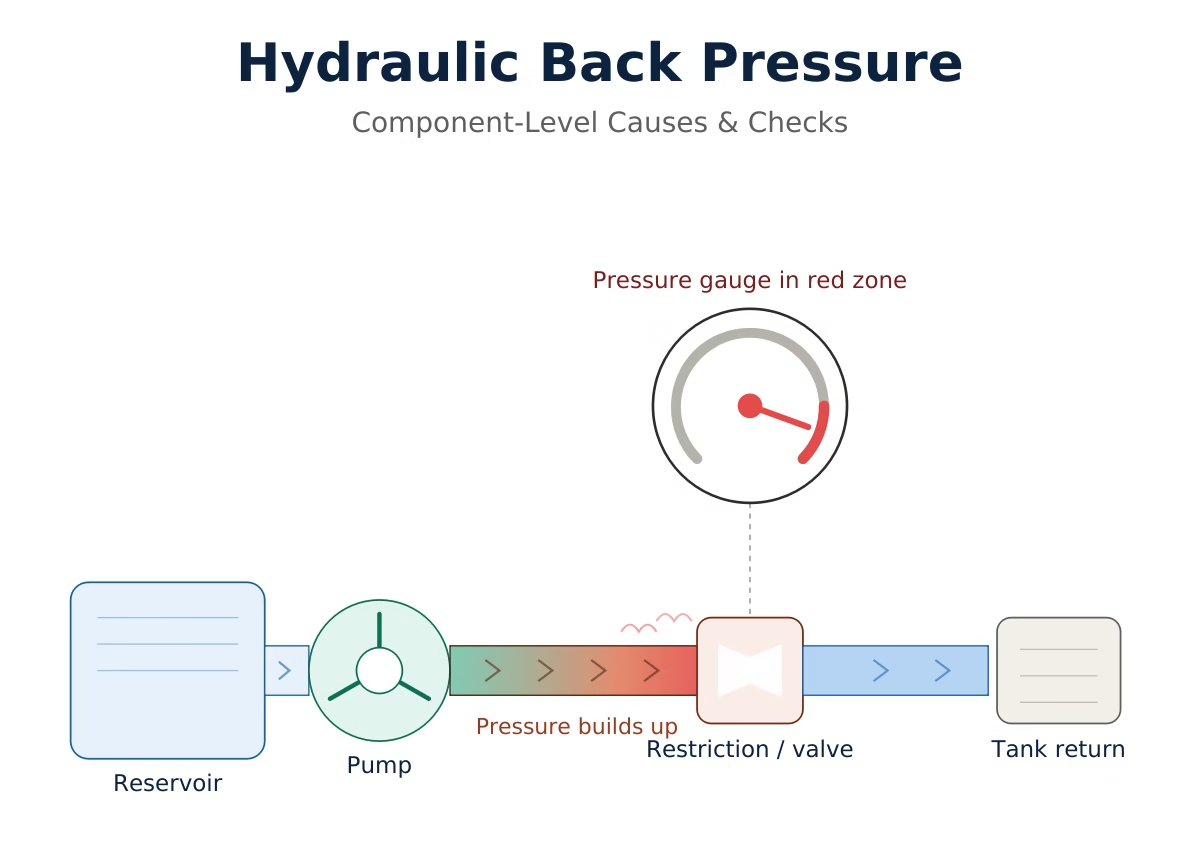
Where Does Back pressure Affect Hydraulic Components?
Hydraulic Pump And Case Drain
Many piston pumps and some vane pumps send internal leakage oil back to the tank through a case‑drain line. A blocked or small drain hose, bad fitting, blocked tank connection or shared drain line will raise pressure inside the pump housing.
Too much housing pressure can damage the shaft seal and cause leaks. Normal pump outlet pressure does not rule out this fault, because outlet pressure and housing pressure are measured at different ports. Check the pump’s maximum continuous and peak housing pressure values, then take readings at the correct drain test point.
Hydraulic Motor
A motor creates torque from the pressure difference between its inlet and outlet. If inlet pressure stays the same but outlet pressure goes up, the pressure difference gets smaller and torque drops.
In a series circuit, the first motor discharges into the second motor. The pressure required by the second motor becomes backpressure on the first. Before using this layout, verify the upstream motor’s outlet-pressure limit, both motors’ case-pressure limits, and whether either unit requires an external case drain.
Hydraulic Cylinder
Pressure in the exhausting chamber opposes cylinder movement. The opposing force depends on pressure and the effective area on that side of the piston. A supply gauge alone therefore cannot show the cylinder’s net hydraulic force.
Peak return flow is also important. When a standard double‑acting cylinder retracts, oil enters the small rod‑side space while a large volume of oil flows out of the full‑bore side. This return flow can be higher than the pump output and overload return filters, coolers, valve openings or shared tank lines.
Directional And Proportional Valves
Oil from an actuator flows through the valve work port, spool opening and tank port. Small valve passages or high pressure in the tank line increase outlet pressure for the actuator and waste energy as heat.
Take Hydraflu solenoid valve SVC0828 as example, its catalog maximum flow is 20 L/min. According to the pressure‑flow curve, pressure drop across the valve reaches approx.14 bar at 20 L/min.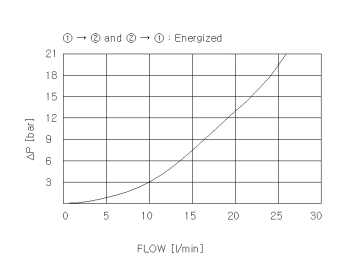
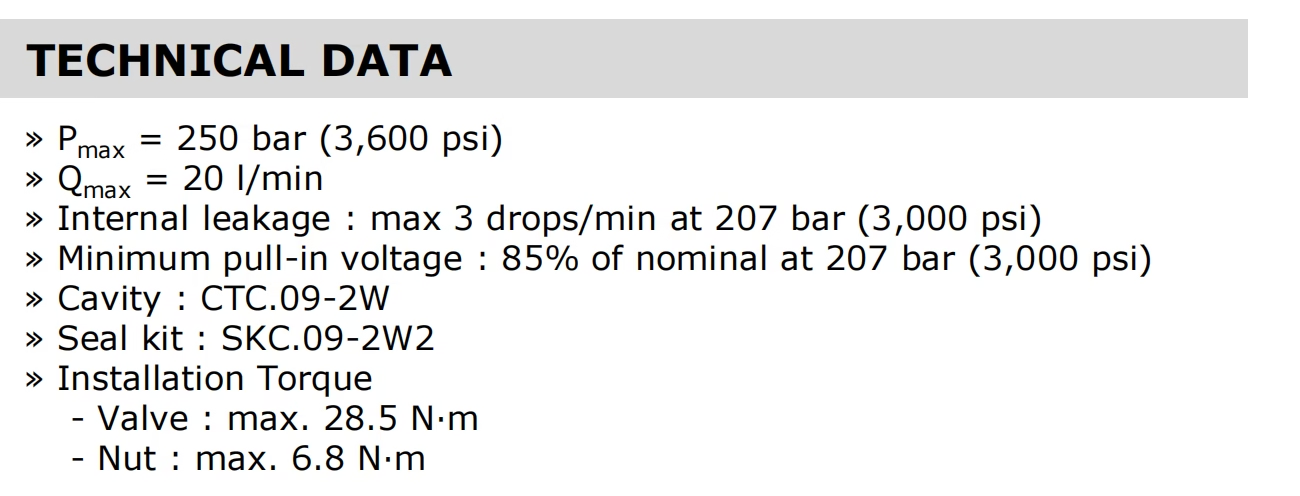
When multiple undersized valves are connected in series, individual pressure losses add up and create high overall backpressure in circuit. Excessive backpressure reduces cylinder thrust, generates heat and disturbs function of counterbalance valves.
Tank‑port pressure also impacts pilot‑operated and proportional valves. Valves with internal pilot drain use the tank port as a pressure reference. Changing tank‑port pressure can make the valve shift incorrectly. Before rerouting hoses, check the valve’s tank‑port rating and see if pilot drain is internal or external.
Return Filter And Oil Cooler
Choose return filters for peak return flow, not just normal pump flow. Dirty filter elements, thick cold oil or undersized filter housings create higher pressure difference. Check the clog indicator and see if the bypass valve opened. Do not trust a filter just because it looks clean.
Coolers add extra flow resistance. Check their pressure‑drop data for your real flow rate and oil viscosity, especially on cold startup. If filters and coolers share a line used by multiple functions, calculate total combined flow.
Hoses, Fittings, And Quick Couplings
Backpressure can accumulate across long hoses, small fittings, elbows, adapters, and quick couplings.
Part‑connected, damaged or mismatched quick couplings can create serious local blockages.
Do not replace only the hose based on its nominal diameter. Compare pressure immediately before and after each suspected component under the same flow and oil-temperature condition.
Manifold internal passages
External ports may be large enough, but drilled internal manifold passages can restrict flow. Shared passages are critical when multiple actuators drain oil at the same time. If two branches each send back 20 L/min, the shared passage must handle 40 L/min total.
For a hydraulic manifold block, review drilling diameter, passage length, intersections, cartridge cavities, and simultaneous flow paths rather than checking port threads size alone.
Counterbalance Valve
A hydraulic counterbalance valve intentionally creates resistance to control an overrunning load. Removing it or lowering its setting without a circuit review can compromise load control.
Unwanted outlet backpressure can also change valve behavior. For the non-vented designs covered by Sun Hydraulics:
Increase in effective setting = outlet backpressure × (1 + pilot ratio)
With a 3:1 pilot ratio and 100 psi outlet backpressure, the calculated increase is 400 psi. This example is design-specific, not a universal setting rule. Confirm the pilot ratio, venting arrangement, drain reference, and manufacturer’s data.
How Should You Diagnose Backpressure?
- Mark inlet, outlet, tank (T), case‑drain and pilot‑drain ports on your hydraulic drawing.
- Recreate the fault with the same load, oil temperature and working functions.
- Measure pressure before and after suspect parts. Record steady pressure and short pressure spikes.
- Compare measured values against the manufacturer’s pressure limits for that exact component.
- Calculate peak flow for each branch and shared lines, including flow changes caused by cylinder piston‑rod area differences.
- Follow the oil flow path: check filter indicators, cooler data, couplings, valves, hoses and manifold passages.
Use correct test points and properly rated gauges. Support heavy loads and release stored energy before service work. Never loosen pressurized hoses or short‑circuit load‑holding valves for testing.
Frequently Asked Questions
What Backpressure Limit Should I Use?
Use the manufacturer’s published limit for each specific port and part. Check whether it applies to continuous, intermittent or peak conditions. Using a percentage of system pressure is not reliable.
Can A Main Pressure Gauge Find A Case-Drain Problem?
No. The main gauge shows pump output pressure, not pressure inside the pump housing. Use the official case‑drain test point and equipment that can catch pressure spikes.
Will A Larger Return Hose Fix Backpressure?
Only if the hose itself causes most of the pressure loss. Larger hoses cannot fix downstream load pressure, narrow valve paths, blocked couplings or undersized shared manifold passages.
Is some back pressure normal, or should I try to remove all of it?
Some is normal, and on certain circuits it’s there on purpose — to control a load or protect against cavitation. Only treat it as a problem once it’s pushing past what your components are rated for.
What’s a sign my return line might be too small?
Heat building up near the return hose is one clue. Another is a system that runs fine with one actuator but slows down as soon as two operate together — that usually points to a shared return line, not just line size alone.
Can back pressure damage my pump or motor?
Not usually on its own, but it makes them work harder to move the same oil, which generates extra heat and adds wear over time. It’s a contributing factor more than a direct failure cause.
Will a bigger return line always fix high back pressure?
Not necessarily. If the real cause is a clogged filter, cold oil, or a worn valve, upsizing the line alone won’t solve it. Worth checking all of these before you resize anything.
Does a vented counterbalance valve get rid of back pressure completely?
No. It changes how the valve’s spring reference responds to return pressure, but pressure in the drain line can still affect the setting, and the rest of the return path still needs correct sizing.
Final Thoughts
Backpressure troubleshooting should point to a specific part and port, not just blame the return line. When consulting HYDRAFLU, provide the schematic, model codes, peak flows, oil temperature, operating sequence, and pressure readings for the affected hydraulic power pack or circuit.

